
Gravity Septic Systems: What They Are and How They Work

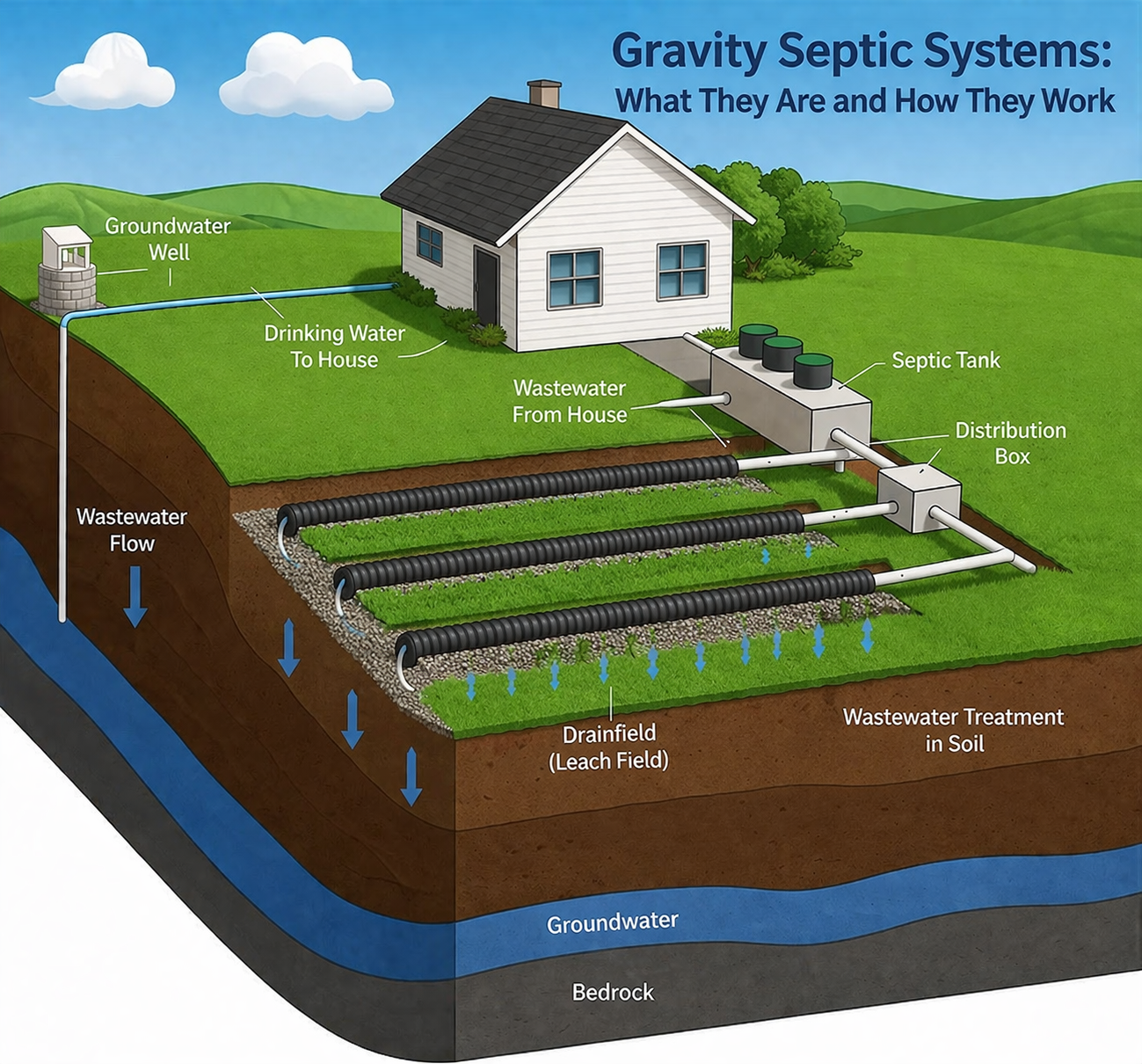
Septic systems remain one of the most reliable ways to manage wastewater on rural and suburban properties. While modern technology has introduced pumps, drip dispersal, and advanced treatment units, many homeowners still prefer the simplicity and long-term dependability of a gravity septic tank. The idea behind this approach is straightforward: wastewater flows naturally through each stage without mechanical devices pushing it forward. Because of this uncomplicated design, gravity-based systems are often considered affordable, durable, and easy to maintain. Yet before choosing this option, it is helpful to understand how the system functions, how it is installed, and what long-term care looks like.
Table of Contents
What Is a Gravity Septic System
A gravity system septic relies entirely on gravity to move wastewater from the home into the tank and then out to the drain field. Unlike pressure systems, there are no pumps or dosing chambers. This design is commonly used on lots with a gentle slope, where wastewater can travel downward without assistance. Standard gravity fed septic systems include a septic tank, distribution box, and a series of trenches known as a gravity septic field. Because these systems use natural flow, they are considered part of the most conventional types of septic systems in residential settings. Homeowners appreciate the simplicity and few moving parts, which reduces potential mechanical failures.
How Does a Gravity Septic Tank Work
A gravity flow septic system operates in predictable stages. Wastewater enters the tank, where solids settle and fats float, creating the first level of separation. The clarified liquid then exits through an outlet and moves toward the distribution box. The distribution box divides the flow into equal streams that travel into the trenches of the leach field. Since no mechanical dosing occurs, the movement depends entirely on the natural slope and interior design of the system. The overall gravity septic operation requires careful layout and proper site preparation, ensuring that pipes slope consistently so effluent can move steadily. Routine pumping prevents solids from building up and ensures long-term performance.
How to Install a Gravity Septic System
Installation begins with a soil evaluation to confirm that the land can support this type of system. An excavation contractor then digs the trenches and prepares the area for the septic tank. Once the tank is placed, the distribution box and drain lines are set at a precise slope to maintain natural flow. Homeowners coordinating septic tank installation must ensure that all components align correctly since gravity cannot compensate for poor leveling. Proper installation also requires attention to backfilling, drainage, and potential groundwater movement. In some regions, additional sewer service connections or inspection steps are required before the system becomes operational.
Gravity Septic System Pros and Cons
Pros
- Fewer mechanical parts reduce long-term repair needs;
- Straightforward designs make installation easier;
- Works well on gently sloped properties;
- Lower electrical demand since no pumps are required;
- Reliable and conventional option for many rural homes.
Cons
- Requires naturally sloped land;
- Distribution may be uneven if the field is not level;
- Limited flexibility compared to systems with dosing pumps;
- Not ideal for properties with high groundwater;
- Drain field sizing must be precise to prevent overload.
How Much Does a Gravity Septic System Cost
Costs vary depending on soil conditions, trench length, and tank size. In general, homeowners can expect pricing to fall on the lower end compared to more complex systems. Installation by a certified contractor, materials, and excavation all contribute to the final amount.
As for long-term questions like “How long does a gravity septic system last?” many systems function 20 to 30 years with proper care. Do gravity septic systems need to be pumped? Yes, regular pumping every three to five years is recommended.
Maintaining a Gravity Septic System
Maintenance focuses on preventing solids from entering the field and ensuring natural flow remains unobstructed. Routine tank pumping, avoiding grease buildup, protecting the field from heavy traffic, and monitoring for seepage are essential steps. Homeowners asking “How to maintain a gravity septic system?” should also watch for odors and wet spots around the trenches. With consistent care, the system remains efficient without mechanical adjustments.