
How to Clean Artificial Grass Step-by-Step

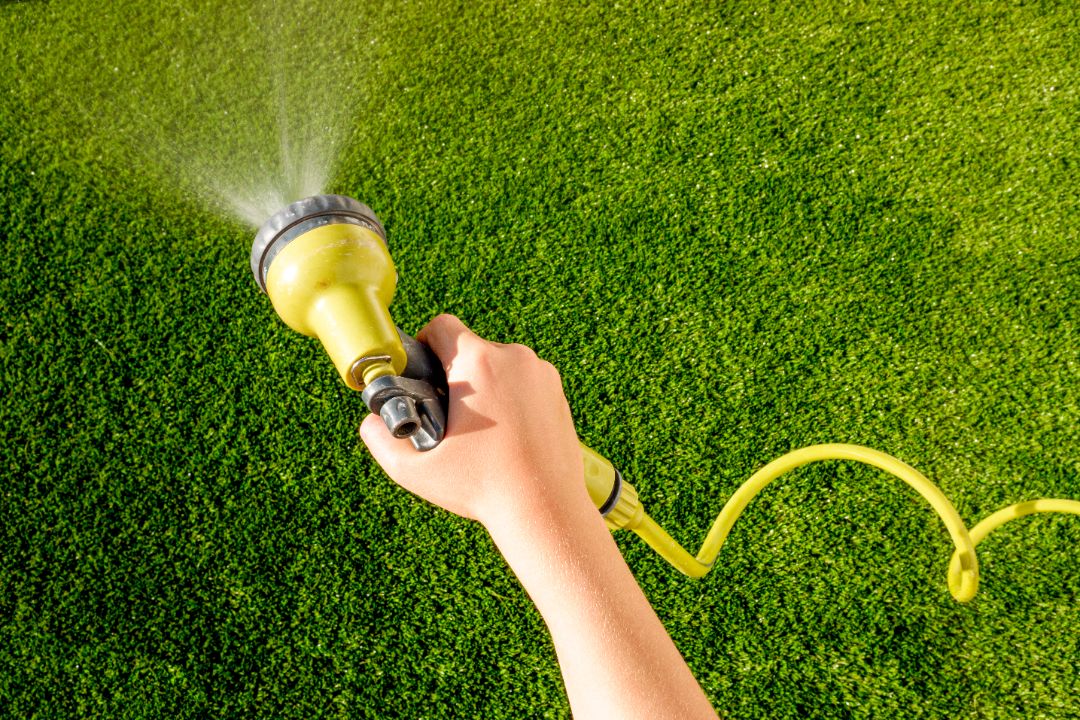
Your artificial grass doesn’t need much maintenance compared to real lawn, but it absolutely needs cleaning. Think of it like this – you wouldn’t let your carpet go months without a vacuum, right? Same deal here. Clean artificial turf stays vibrant, hygienic, and honestly just looks better for way longer. We’re talking about keeping that investment in top shape, and trust me, it’s easier than you think. Most homeowners can knock out a deep clean in under an hour, and the regular maintenance? Even less time. Let’s break down exactly how to keep your fake grass looking fresh, feeling soft, and smelling clean year-round.
Table of Contents
Why regular cleaning matters for fake grass
Here’s what nobody tells you when you first get artificial turf installed. Dust settles. Pollen accumulates. Leaves decompose right there on the surface, creating this weird film you might not even notice until it’s pretty bad. And if you’ve got pets or kids running around? Well, that’s a whole different ballgame.
Regular cleaning prevents several problems that can genuinely wreck your turf over time. UV damage gets worse when dirt and debris trap heat against the fibers – imagine leaving a dark blanket on your lawn in summer. Not good. Plus, organic matter breaks down and creates this breeding ground for bacteria and mold, which isn’t just gross, it’s actually a health concern. The fibers themselves can get matted down permanently if you let dirt and grime build up too long, and once they’re flattened like that, no amount of brushing brings them back to life.
But there’s also the simple fact that clean turf just performs better. Better drainage (because the infill holes aren’t clogged), better temperature control, and yeah – it looks about a thousand times nicer. Site Prep has seen plenty of lawns that could’ve lasted 20 years get replaced at year 10 simply because the owners didn’t maintain them properly.
What you need to clean fake grass properly
Good news – you probably already own most of this stuff. No fancy equipment required, though having the right tools definitely makes the job faster.
For basic cleaning, grab:
- Garden hose with a spray nozzle
- Leaf blower or stiff-bristled broom
- Mild dish soap or specialized turf cleaner
- Soft-bristle brush (not wire – that’ll damage the fibers)
- Bucket for mixing solution
- Optional: power broom or mechanical sweeper for large areas
Skip the pressure washer unless you really know what you’re doing. Too much pressure can damage the backing, loosen seams, and blast away infill. Save yourself the headache and stick with regular water pressure from a standard hose.
How to deep clean artificial grass step by step
Alright, let’s get into the actual process. This is what professionals use, and honestly, it’s pretty straightforward once you’ve done it once or twice.
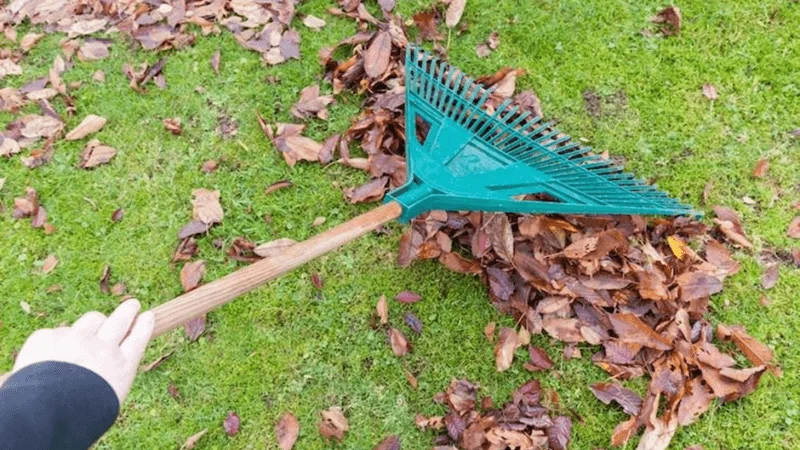
Step 1: Clear the surface
Start with the obvious stuff. Remove any toys, furniture, branches – whatever’s sitting on your turf. Then grab your leaf blower or broom and get rid of loose debris. Leaves, dirt, small twigs, whatever. You’d be surprised how much accumulates, especially if you’ve got trees nearby. This step takes maybe 10 minutes tops, but it makes everything else way more effective. Don’t half-ass this part – getting debris out first means your cleaning solution actually reaches the turf instead of just washing over a layer of leaves.
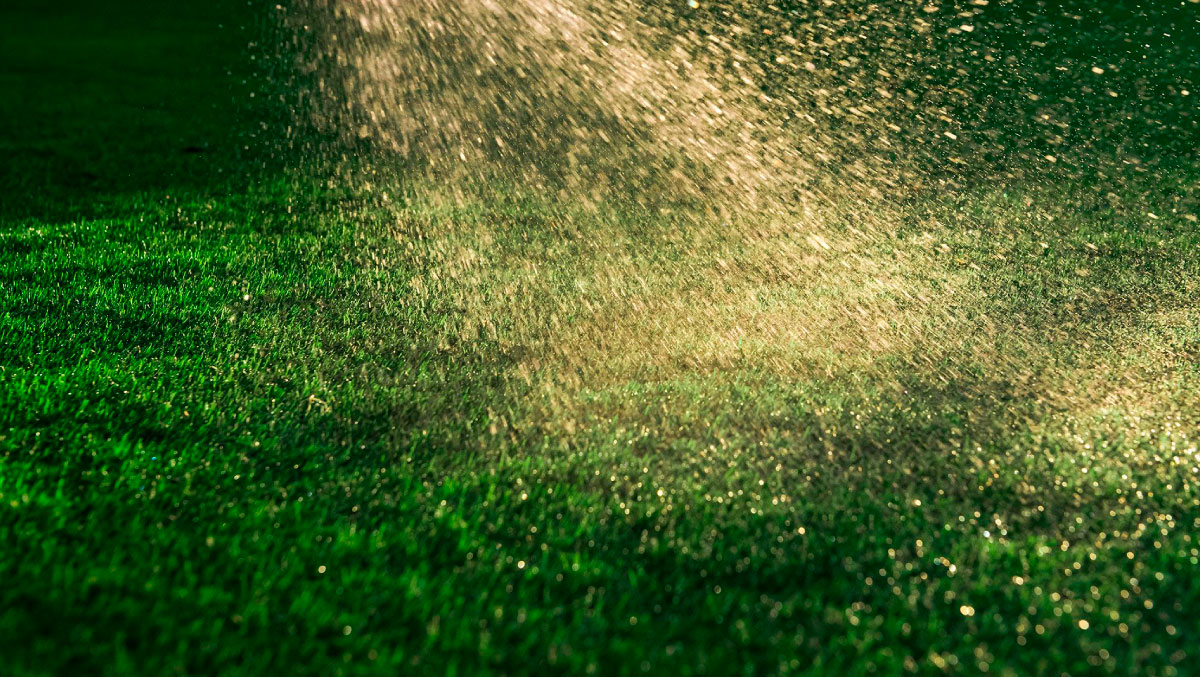
Step 2: Wet the turf
Give the entire area a good rinse with your garden hose. Nothing crazy, just enough to get everything damp. This pre-rinse does two things: it loosens up any stuck-on dirt, and it prepares the surface to actually absorb your cleaning solution instead of just repelling it. Think of it like wetting your hair before shampooing. Makes sense, right?
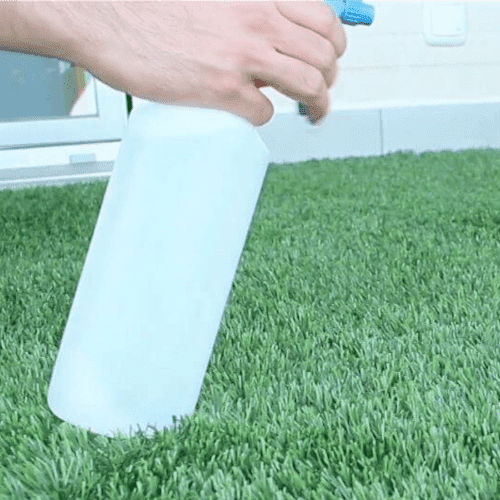
Step 3: Apply a cleaning solution
Mix up your cleaner – usually it’s about a tablespoon of mild dish soap per gallon of water. Or use a specialized turf cleaner if you’ve got one. Pour or spray this over the grass in sections, working in manageable chunks rather than trying to do the whole lawn at once. The solution needs a minute or two to work its magic, breaking down oils, grime, and whatever else is lurking in there. But don’t let it sit so long that it dries – that defeats the whole purpose.
Step 4: Scrub problem areas gently
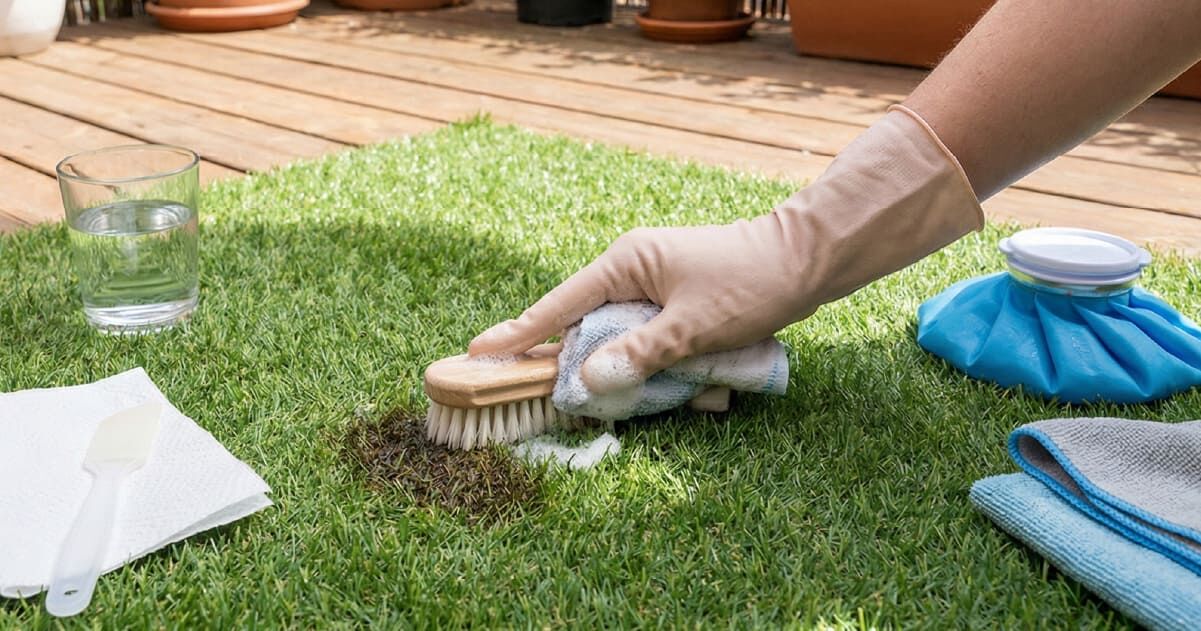
Got any spots that look particularly nasty? Pet areas, high-traffic zones, places where kids play constantly? These need a little extra attention. Use your soft-bristle brush and gently scrub in a circular motion. Key word: gently. You’re not trying to scrub paint off a wall here. The goal is to work the cleaner into the fibers and loosen stubborn dirt without damaging anything. If you’re dealing with something like a clean turf burn situation – maybe someone slid across it wrong or there’s melted rubber from shoes – you might need a specialized cleaner for that specific stain.
Step 5: Rinse thoroughly
This is where people often mess up. You need to rinse until the water runs completely clear. And I mean completely. Leftover soap creates this sticky residue that actually attracts more dirt, which means you’re basically undoing all your hard work. Rinse, rinse, and then rinse some more. Move in overlapping patterns so you don’t miss any spots. It takes longer than you’d think, but it’s worth it.
Step 6: Let it dry and groom the grass
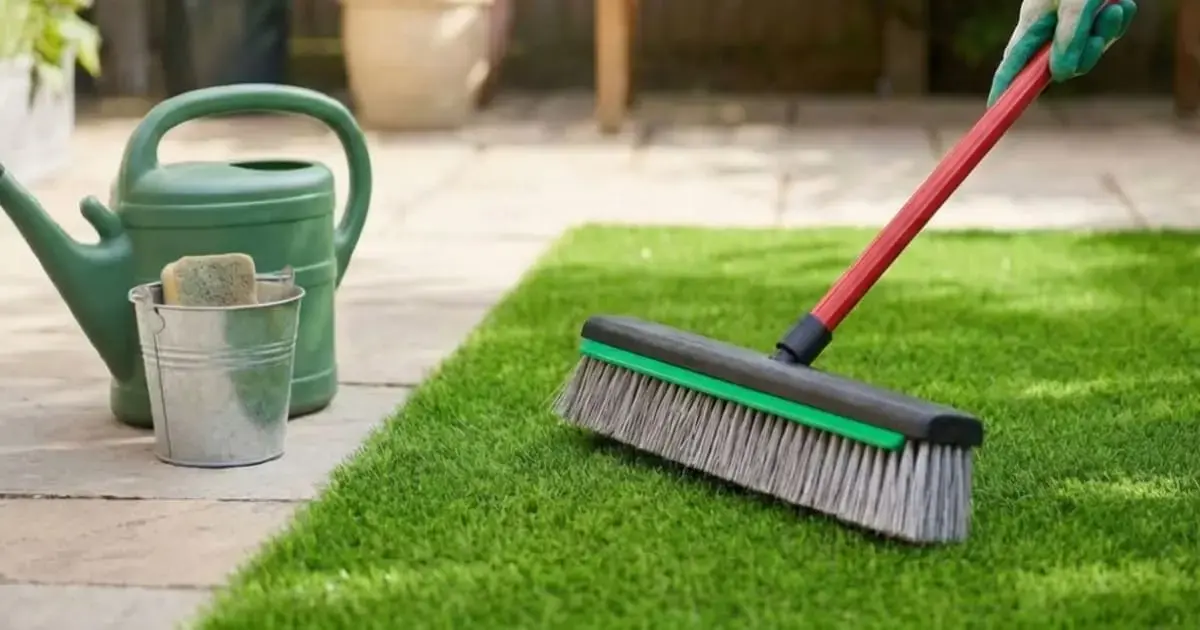
Once everything’s rinsed, let nature do its thing. The turf will air-dry pretty quickly, usually within a few hours depending on weather. After it’s dry (or mostly dry), grab your broom or power brush and groom against the grain of the fibers. This fluffs everything back up, makes it look fresh, and redistributes any infill that got moved around during cleaning. Some people skip this step, but honestly? It makes a huge difference in how the final result looks.
How to remove stains from fake grass
Stains happen. Coffee gets spilled during backyard parties, kids drop popsicles, birds do their thing. Most stains come out with regular soap and water if you catch them early. But for stubborn ones – grease, paint, gum – you need specific approaches.
For grease stains, try a degreasing dish soap (like Dawn) applied directly to the spot. Let it sit for 10 minutes, then scrub and rinse. Paint and gum? Freeze them first with ice cubes, then gently chip away with a plastic scraper. Never use harsh chemicals like bleach or acetone – they’ll discolor or damage the fibers permanently. And when you’re trying to figure out the best way to clean turf stains, test your cleaning method on a small, hidden area first. Better safe than sorry.
How to keep fake grass smelling fresh
Smell problems usually come from organic buildup or pet waste. Regular rinsing helps a ton, but you can also use a turf deodorizer – they’re designed specifically for synthetic grass and won’t cause any damage. Mix equal parts white vinegar and water for a DIY solution that actually works pretty well. Spray it on, let it sit for 15 minutes, then rinse. The vinegar smell disappears once everything dries, taking any funky odors with it.
How to clean turf from dog pee
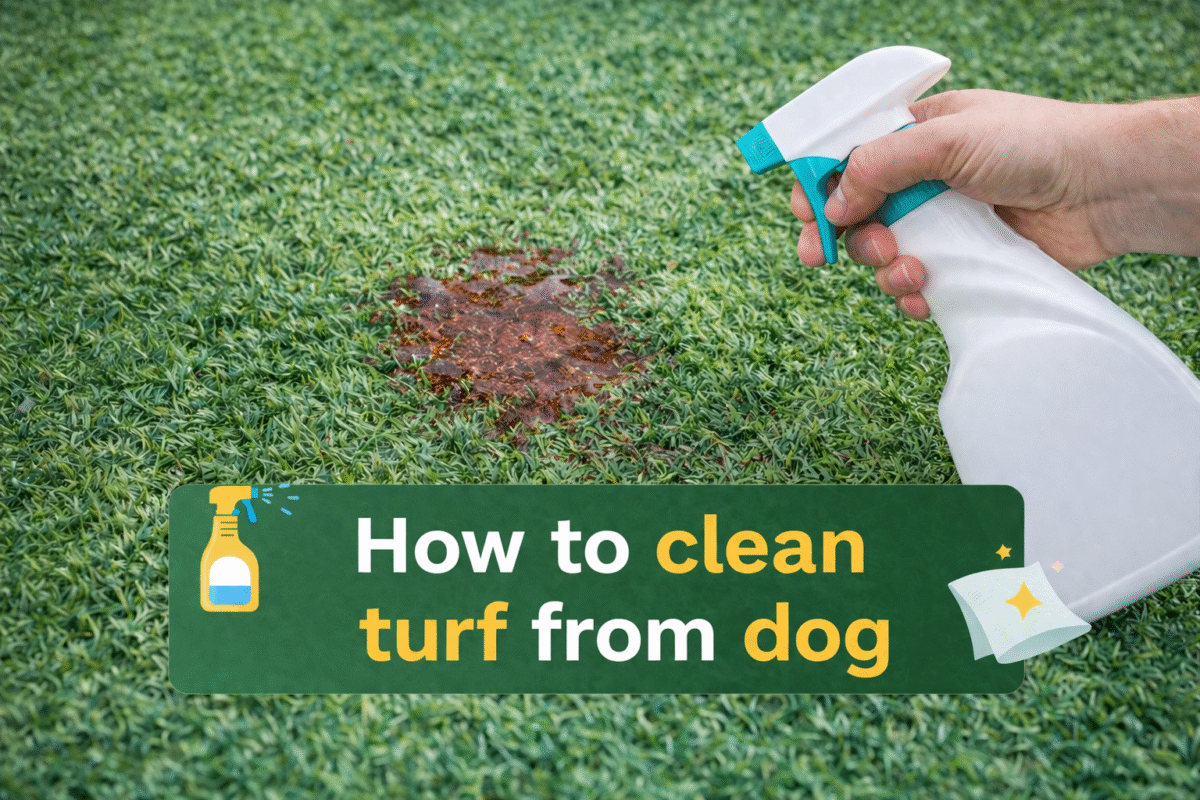
Pet owners, this section’s for you. Dog urine can create some serious smell issues if not handled properly, but the good news is that artificial turf drains way better than real grass. The liquid goes right through to the ground underneath, so you’re mostly dealing with surface residue and odor.
Rinse pet areas daily if possible – seriously, just a quick spray with the hose makes a massive difference. For deeper cleaning, that vinegar solution I mentioned earlier works great. You can also find enzyme-based cleaners made specifically for pet odors on turf. These break down the uric acid that causes the smell rather than just masking it. Professional services can also do antimicrobial treatments if you’re dealing with persistent odor issues, but most homeowners never need to go that route.
For more detailed guidance on keeping your turf fresh with pets around, check out our guide on how to clean turf from dog pee.
How often should you clean fake grass?
Short answer? It depends on usage. Long answer? Here’s what actually works for most situations:
- Weekly: Quick rinse, remove visible debris (takes 5-10 minutes)
- Monthly: More thorough cleaning with soap solution (30-45 minutes)
- Quarterly: Deep clean like the process outlined above, full grooming included (1-2 hours)
- As needed: Spot clean stains and high-traffic areas
Got pets or kids who use the space constantly? Bump everything up. Maybe rinse every other day and do monthly deep cleans. Live alone and barely use your backyard? You can probably stretch the timeline a bit. The turf itself will tell you what it needs – if it’s looking dull, feeling crunchy, or starting to smell, it’s time for a cleaning regardless of your schedule.
What’s the best way to clean artificial turf
Professional turf cleaning services use commercial-grade equipment – power brooms, industrial vacuums, specialized cleaning solutions that you can’t buy at the hardware store. They’ll also do infill top-ups, antimicrobial treatments, and fiber grooming that goes beyond what most homeowners can achieve with a broom and garden hose. Cost-wise, you’re looking at anywhere from $0.10 to $0.30 per square foot, so a 500-square-foot lawn might run you $50-$150 for professional cleaning. Not cheap, but not outrageous either.
But here’s the thing – you don’t need pros for regular maintenance. Save professional cleaning for annual deep cleans or when you’re dealing with serious issues: heavy pet odors, widespread staining, matted fibers that won’t fluff back up. The DIY method I laid out above handles probably 90% of what you need. Best way to clean turf grass? Honestly, it’s just being consistent with the basics.
How can I make my artificial grass look new again
Time takes its toll, even on synthetic grass. But you can bring back a lot of that “just installed” look with the right approach. Start with a deep clean to remove all the accumulated gunk. Then focus on grooming – use a power broom or stiff brush to really work those fibers, getting them standing upright again. Add fresh infill if yours has settled or washed away; this makes a huge difference in how plush the turf feels and looks.
Check your drainage too. If water’s pooling instead of draining through, you might have compacted infill blocking the holes – that needs addressing. And honestly, sometimes it’s worth bringing in a pro to assess the situation. They can spot problems you might miss and recommend whether you need repairs, additional infill, or just a really good cleaning.
What should you not do to artificial grass
This part matters just as much as cleaning.
Because a lot of turf damage comes from people trying too hard.
Avoid:
- metal rakes
- wire brushes
- strong bleach
solvent-heavy cleaners - too much soap
- leaving pet waste too long
- blasting seams with a pressure washer
placing very hot objects directly on the turf
So what can ruin artificial grass? Usually some mix of excess heat, rough tools, chemical overkill, and ignored buildup. Not one dramatic event – just repeated bad habits.
And if you’re wondering how professionals clean artificial turf, they typically use controlled rinsing, turf-safe cleaners, deodorizing treatments, fiber lifting, and sometimes infill correction. Less “attack the mess,” more “treat the surface properly.”
As for cost, professional turf cleaning varies by yard size, level of buildup, and whether pet odor treatment is involved. Light service may be fairly affordable, while deeper deodorizing or restoration can run into the low hundreds. Still much cheaper than shortening the life of the lawn because it never got cleaned properly.
If the turf still looks off after all that, the issue may not be dirt at all. It may be drainage, infill compaction, or wear from installation conditions. That’s where Site Prep LLC can help you figure out what’s really going on.
FAQ About Cleaning Artificial Grass
Yes, diluted white vinegar can help with light cleaning and mild odor control. It works best for small surface messes, not deep sanitation. If the issue is pet smell or heavy buildup, vinegar alone usually will not do enough.
You can, but plain white vinegar is usually the safer and more predictable option. Synthetic vinegar may work for minor cleaning, though it should still be diluted and tested on a small area first before wider use.
Yes, in small amounts mixed with water. It is commonly used for spot cleaning dirt or greasy marks. The key is not overdoing it – too much soap can leave residue behind, and that residue tends to attract fresh dirt.
Sometimes, but carefully. Low pressure may help with certain messes, while strong pressure can move infill, stress seams, and flatten fibers. If you use it, keep the spray controlled and avoid blasting one area too closely.
Yes. Baking soda can help absorb mild odor, especially in pet areas, and many homeowners use it before rinsing. It is useful as part of a cleanup routine, but it is not a full replacement for proper cleaning or enzyme treatment.
It is better not to. Bleach can be too harsh for the fibers and backing, and it may leave behind a strong chemical smell. A turf-safe cleaner or mild soap and water is usually a much safer choice.