
Sand Mound Septic Systems

💡 Quick Cost Insights
- Average sand mound septic system cost: $10,000 – $25,000+
- In Pennsylvania specifically: $12,000 – $30,000 depending on soil and lot size
- Annual maintenance: $300 – $700
- Pumping every 3–5 years is the standard recommendation
- Expected lifespan: 20–30+ years with proper care
Not every property can handle a conventional septic system — and if you’ve been told your lot has high water tables, poor soil drainage, or shallow bedrock, a sand mound septic system is probably already on your radar. So here’s the short answer: yes, sand mound systems work well. They’re a smart, proven solution for challenging sites, and thousands of homeowners across Pennsylvania and beyond rely on them every day.
That said, they do come with their own set of considerations — cost, maintenance, space requirements, and installation complexity are all part of the picture. Whether you’re building a new home or replacing an aging system, understanding how a sand mound works will save you time, money, and headaches down the road. Let’s break it all down.
Table of Contents
What Is a Sand Mound Septic System?
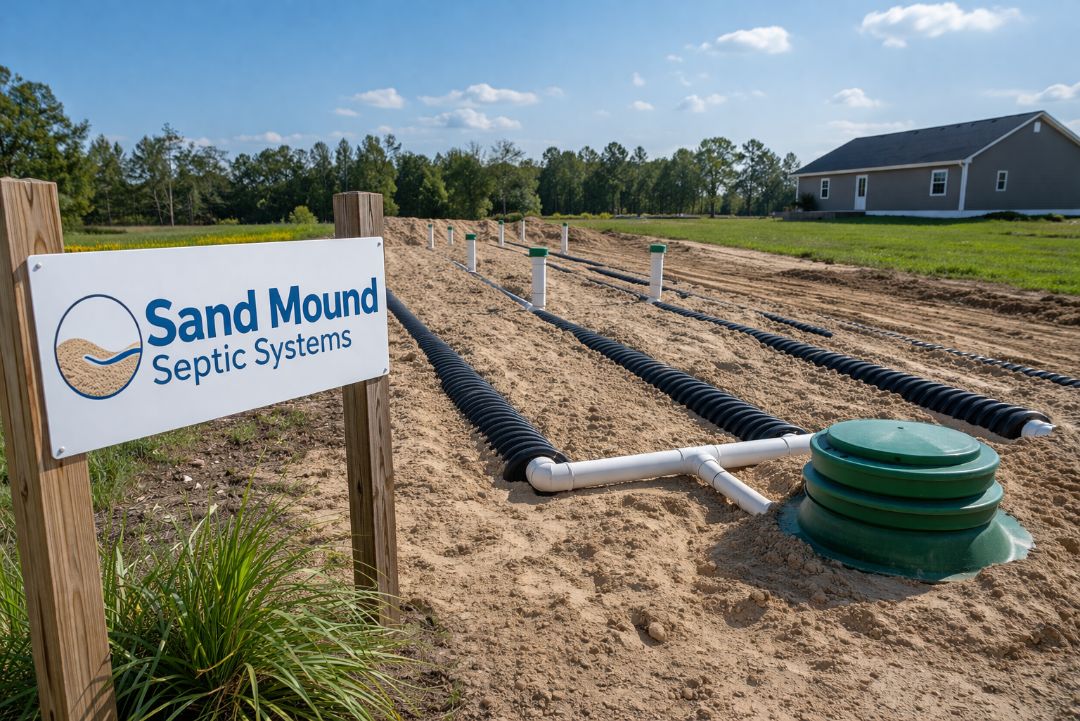
A sand mound septic system is an above-ground wastewater treatment system — literally a raised mound of engineered sand built on top of your property’s native soil. Unlike a traditional septic setup that relies on buried drain fields underground, a sand mound sits elevated because the natural soil below can’t safely treat effluent on its own.
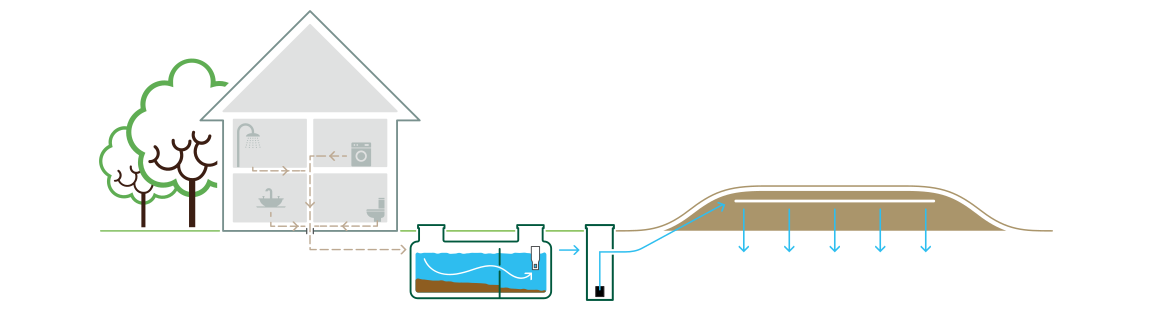
Think of it as a custom-built filtration layer. Wastewater from the septic tank gets pumped up into the mound, percolates through the sand, and by the time it reaches the native soil below, it’s been sufficiently treated. It’s a system designed specifically around the land’s limitations — not against them.
You’ll most commonly see this type of system recommended when:
- The seasonal high water table is too close to the surface
- Soil has a slow percolation rate (clay-heavy ground, for instance)
- Bedrock is too shallow for a conventional drain field
- The property sits near a water source with strict environmental setbacks
Pennsylvania, in particular, has a lot of terrain where soil conditions make conventional systems impractical. That’s why sand mound septic systems in PA are extremely common — and why local site preparation expertise matters so much before you even break ground.
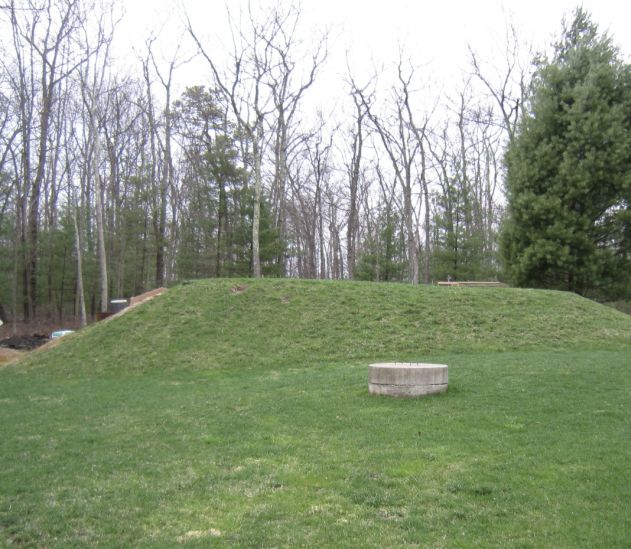
Visually, a sand mound looks like exactly what it sounds like: a large mound of sand — typically 2 to 4 feet high and anywhere from 50 to 150 feet long — covered in topsoil and grass. Not the most glamorous feature of a yard, but it does the job reliably.
How Does a Sand Mound Work
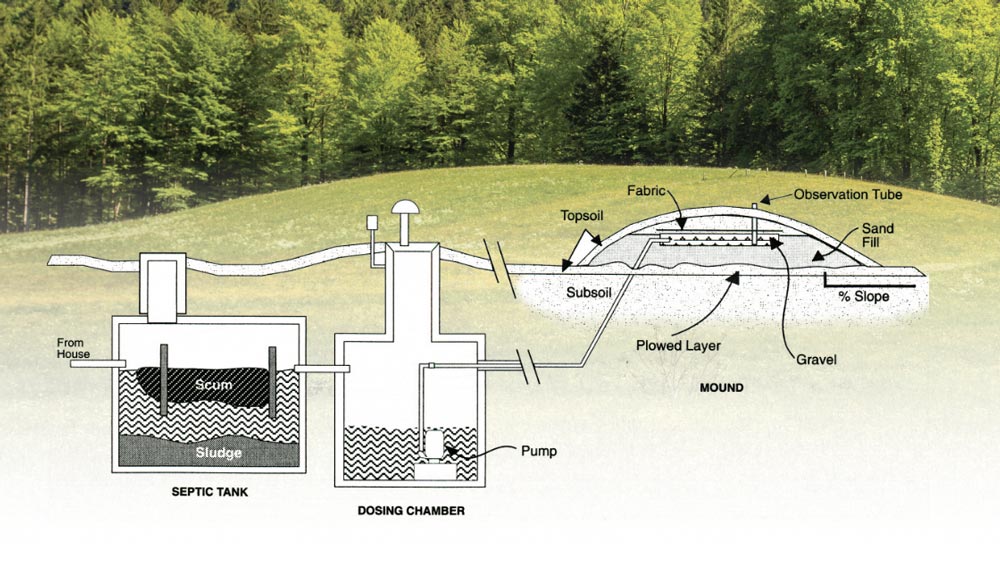
Let’s walk through the process — it’s actually pretty logical once you see the full picture.
Step 1: Wastewater Flows Into the Septic Tank
Everything from your toilets, sinks, and drains flows into an underground septic tank. Solids settle at the bottom as sludge, grease floats to the top as scum, and liquid effluent sits in the middle. That liquid is what gets sent onward for treatment. For a detailed look at that process, check out our guide on septic tank service.
Step 2: The Pump Moves Effluent Into the Mound
Unlike gravity-fed systems, a sand mound relies on a sand mound pump — typically a submersible pump housed in a dosing chamber or pump tank. This pump doses the effluent into the mound at controlled intervals, which allows the sand to treat each batch properly before the next one arrives. No pump, no function — which is why pump maintenance is critical (more on that in the maintenance section).
Step 3: Effluent Filters Through the Sand
Once inside the mound, effluent moves through a distribution network — usually perforated pipes laid in gravel — and then percolates down through the engineered sand layer. This is where biological and physical treatment happens. The sand filters out pathogens and nutrients before the now-treated water reaches the native soil below.
Step 4: Final Treatment in Native Soil
By the time liquid exits the sand layer, it’s been significantly cleaned. The native soil handles final polishing before the water disperses naturally into the ground. No surface runoff, no contamination of groundwater — when the system is working correctly, anyway.
A sand mound septic system diagram typically shows all four of these zones — tank, pump chamber, mound structure, and native soil — layered from left to right. Most state permitting offices and septic engineers can provide site-specific diagrams as part of the design phase.
Sand Mound Septic System Pros and Cons
No system is perfect for every situation. Here’s an honest look at what you’re signing up for with a residential sand mound septic system:
The Upsides
- Works where conventional systems can’t — if your soil fails a perc test, a sand mound may be your best (or only) viable option
- Long lifespan — properly maintained systems routinely last 20 to 30+ years
- Environmentally responsible — the multi-layer filtration protects local groundwater and nearby wells
- Reliable when maintained — with regular pumping and pump checks, these systems rarely fail unexpectedly
- Permitted and code-compliant — they’re a recognized, accepted solution in PA and across most of the US
The Downsides
- Visible above ground — the mound takes up yard space and isn’t exactly aesthetic; you can’t build on it, plant trees over it, or park on it
- Higher upfront cost than conventional systems
- Pump dependency — a power outage or pump failure means the system stops working until it’s repaired
- Requires more ongoing attention — annual inspections, regular pumping, and monitoring are non-negotiable
- Limited placement flexibility — the mound needs to be positioned uphill from sensitive areas, which can restrict your lot layout
Bottom line? If your site conditions demand it, a sand mound is a solid, dependable choice — just go in with clear expectations about cost and upkeep.
How Much Does a Sand Mound Septic System Cost?
This is usually the first question people ask — and fairly so, because the cost of a sand mound septic system is notably higher than a standard buried system. Here’s why: you’re essentially building a treatment structure from scratch above ground, with engineered materials, a pump system, and specialized labor.
Costs vary based on system size, soil conditions, local permitting fees, accessibility, and contractor rates. The table below reflects realistic 2026 pricing for most US markets, with a separate column for Pennsylvania — one of the most active states for elevated sand mound septic systems.
Sand Mound Septic System Cost — 2026 Estimates
| Component / Scenario | National Average | Pennsylvania (PA) |
|---|---|---|
| Full system installation (average home) | $10,000 – $20,000 | $12,000 – $25,000 |
| Large or complex system | $20,000 – $30,000+ | $25,000 – $35,000+ |
| Septic tank only (1,000–1,500 gal) | $1,200 – $3,000 | $1,500 – $3,500 |
| Pump & dosing chamber | $1,500 – $4,000 | $2,000 – $4,500 |
| Engineered sand & fill material | $2,000 – $6,000 | $2,500 – $7,000 |
| Permitting & soil testing | $500 – $2,000 | $700 – $2,500 |
| Annual inspection & maintenance | $300 – $600 | $350 – $700 |
| Pump replacement (when needed) | $500 – $1,500 | $600 – $1,800 |
* Prices are estimates based on 2026 market conditions. Actual costs depend on lot size, system design, local labor rates, and site-specific conditions. Contact Site Prep LLC for an accurate quote for your property.
What Drives the Price Up?
A few factors push sand mound septic system cost in PA — and elsewhere — toward the higher end of the range:
- Difficult site access (steep slopes, tight lots)
- Larger household size requiring a bigger system
- High-quality engineered sand (not all sand is created equal for this purpose)
- Rocky or heavily clay-laden native soil that requires additional prep
- Pump chamber complexity
If you’re budgeting for a new build, it’s worth getting a site preparation assessment early — before you commit to a floor plan — so the system size and location can be factored into the overall site design from day one.
How to Install a Sand Mound Septic System
Installation is not a DIY project. This is a permitted, engineered process that requires licensed septic contractors, soil scientists, and in most states, inspections at multiple stages. Here’s a realistic overview of what the process looks like:
1. Soil Evaluation & Percolation Testing
Before anything gets designed, a licensed soil evaluator tests the native soil — its texture, drainage rate, and depth to the water table. This determines whether a mound is needed and how it should be engineered.In Pennsylvania, this step is required by the Department of Environmental Protection, which oversees onlot sewage permitting and inspections at the municipal level under Act 537.
2. System Design & Permitting
A registered engineer or certified sewage enforcement officer designs the system based on soil data, lot size, and household wastewater output. Permits are pulled before any excavation begins. Skipping this step isn’t just risky — it’s illegal.
3. Excavation & Site Prep
The installation area is cleared and prepared. Topsoil is stripped and stockpiled. The native soil surface is scarified (roughed up) to help bonding between natural soil and the engineered fill. This is a critical phase where proper site preparation directly affects how well the system performs long-term.
4. Mound Construction
The raised sand mound system is built in layers — first a base of clean fill sand, then the absorption bed with perforated distribution pipes set in gravel, and finally a cap of topsoil. The geometry and dimensions are dictated by the permit design. This isn’t freeform — every measurement matters.
5. Septic Tank & Pump Chamber Installation
The septic tank and dosing (pump) chamber are set underground, connected to the home’s sewer line service, and linked to the mound via a pressurized distribution line. The pump is wired to a control panel with an alarm — so if something goes wrong, you know immediately.
6. Final Inspection & Grading
Local inspectors verify the installation meets all permit specifications. Once approved, the site is graded and seeded. The mound should be vegetated with grass — never planted with deep-rooted plants or trees, which can damage the distribution pipes and liner.
How to Maintain a Sand Mound Septic System
This is where a lot of homeowners drop the ball — and it’s the most common reason systems fail prematurely. A sand mound doesn’t ask for much, but what it does ask for, it needs consistently.
Pump the System Regularly
Yes — sand mound septic systems do need to be pumped. The septic tank accumulates sludge over time, and if it’s not removed, solids start flowing into the mound — clogging the sand and destroying the system’s ability to treat effluent. Most households should pump every 3 to 5 years — a recommendation consistent with EPA’s guidance for residential septic system owners, which notes that regular pumping is the single most important step in preventing system failure. (Note: Site Prep LLC focuses on installation, repair, and maintenance services — for pumping, you’ll want to engage a licensed septic pumping company in your area.)
Inspect the Pump Annually
The dosing pump is the heart of the system. An annual check — testing the pump, float switches, alarm system, and timer settings — can catch problems before they become expensive failures. Our septic tank service team can walk you through what a proper inspection covers.
Watch What Goes Down the Drain
Harsh chemicals, bleach in large quantities, grease, and non-biodegradable materials all disrupt the bacterial balance in the tank and can damage the sand layer over time. Use septic-safe products, and keep garbage disposal use to a minimum.
Protect the Mound Itself
- Keep vehicles off it — even a single pass with a heavy vehicle can compact the sand and crush distribution pipes
- Maintain grass cover — it prevents erosion and signals system health (yellowing or dying grass can indicate a problem below)
- Redirect surface water away from the mound — excess water can saturate the system and reduce its treatment capacity
- Don’t cover it with plastic, gravel, or pavement
Keep Records
Maintain a log of pump dates, inspections, and any repairs. If you ever sell the property, buyers and their inspectors will want this information — and it demonstrates the system has been cared for properly.
With consistent attention, a well-built sand mound system will serve a household for 25 to 30+ years without major issues. Neglect it, and you’re looking at a much shorter lifespan and a very expensive replacement.
Sand Mound Alternatives in PA
A sand mound is the most common solution for problematic soil conditions, but it’s not the only one. If you’re exploring sand mound alternatives in PA, here are the main options worth discussing with a licensed engineer:
Drip Irrigation Systems
A drip system delivers treated effluent through a network of subsurface tubing across a wide area — essentially a highly controlled dispersal system. It requires a treatment unit upstream (often an aerobic treatment unit) and is generally more expensive than a sand mound, but it’s nearly invisible and works well on certain lot types.
Aerobic Treatment Units (ATUs)
ATUs treat wastewater to a higher standard than a standard septic tank by introducing oxygen into the process. The output can be dispersed more flexibly — sometimes even through a smaller drain field. They’re more mechanically complex and require more maintenance, but they’re a solid alternative on constrained lots.
Constructed Wetland Systems
More common in rural or large-acreage settings, constructed wetlands use natural filtration through gravel beds and wetland plants. They’re less common in suburban PA contexts but can be effective and visually appealing where space allows.
Holding Tanks
A last resort — holding tanks simply store all wastewater until they’re pumped. No treatment, no dispersal. Ongoing pumping costs make this expensive long-term and it’s typically only approved where no other option is feasible.
Comparison Table
| System Type | Best For | Estimated Cost (2026) | Maintenance Level |
|---|---|---|---|
| Sand Mound | High water table, poor perc | $12,000 – $30,000 | Moderate |
| Drip Irrigation | Small lots, tight setbacks | $15,000 – $35,000 | High |
| Aerobic Treatment Unit | Low-volume use, tight lots | $10,000 – $25,000 | High |
| Constructed Wetland | Large rural properties | $8,000 – $20,000 | Low–Moderate |
| Holding Tank | No other viable option | $3,000 – $8,000 (+ pump-outs) | Very High (ongoing) |
Not sure which system fits your property? The best first step is a proper soil evaluation combined with a consultation on types of sewage systems for homes — that conversation will narrow your options quickly based on real data, not guesswork.
Working With Site Prep LLC
At Site Prep LLC, we specialize in the installation, repair, and maintenance of sand mound systems and conventional septic solutions across Pennsylvania. We don’t do one-size-fits-all — every system we install is designed around your specific lot, soil conditions, and household needs.
Whether you’re staring down a failed perc test, replacing an aging system, or planning a brand-new build — we’ve seen the full spectrum of septic challenges in this region, and we know how to solve them efficiently. Our team handles everything from the initial site preparation through final inspection, so you’re not juggling multiple contractors or wondering what happens next.
Questions about your property? Give us a call or fill out our contact form — we’re happy to talk through your options before you commit to anything.