Table of Contents
12″ Wider All Around
Maybe you’re excited because you found the shed of your dreams, but now you are concerned about choosing the perfect sized shed base for your new structure. You’re in good company! In this article, we will focus on answering your questions concerning the size of your shed foundation.

How big should your base be?
An important question many folks have when planning for their new shed or storage building is: “Should a shed base be bigger than a shed?” In short, it depends on your shed base. If you choose a concrete shed base it should remain the same size as your shed. However, your gravel shed foundation should be 12″ wider than your shed, all the way around the building.
Let’s break it down further. If your shed measures 8’x12′, your gravel foundation should be 10’x14′. Because we understand that math is not always a favorite activity, we have added a table so you can find the foundation size that directly correlates to your shed.
| Shed Size | Shed Foundation Size |
| 8×10 | 10×12 |
| 8×12 | 10×14 |
| 10×12 | 12×14 |
| 10×16 | 12×18 |
| 12×16 | 14×18 |
| 12×20 | 14×22 |
| 12×24 | 14×26 |

In cases where your shed has an extra large overhang, you may want to make your foundation big enough so that the water that runs off the roof runs onto the stone pad. Of course, you always have the option to add a gutter and downspout to control the runoff.
Now, we are not simply throwing out the number 12 just because we think it’s a lucky number (we don’t). Really, there are good reasons why we recommend that you add this amount of space to your gravel shed foundation…
5 Reasons to Make Your Gravel Foundation Wider than Your Shed
Protects the Wood Siding

Making your gravel shed foundation wider than your shed helps to reduce the amount of water that splashes up against your shed. Repeated contact with a significant amount of moisture over the course of several years is what causes the siding to rot around the bottom (see photo).
You’ll notice that if you pour water into a bucket of gravel, it splashes less than if you pour it into an empty bucket. The same thing happens when water runs from the roof onto a gravel pad. It splashes less than if the building was surrounded with concrete or another hard surface. This keeps your shed dryer.
Keeps Your Shed Cleaner
Another benefit of making your gravel foundation wider than your shed is that it keeps your shed cleaner. If rain water splashes into the dirt and up against your shed it will make your shed look like it took a mud bath
If you allow grass to grow around your shed, it may keep the mud from splashing up onto your shed. But then you’ll have another problem which we’ll address below.


Blocks Grass and Weeds
Grass and weeds growing against the sides of your shed is a problem because it traps moisture after a rainfall. Your shed won’t dry out as quickly which may cause long-term problems.
Another problem is that you may need to weed whack around your shed which can scuff the paint or scratch the vinyl siding. However, there is a simple solution to this issue: add a wider stone pad.
Reduces Water Runoff
A gravel shed foundation acts like a basin that collects rain water under your shed. This allows the water to soak into the ground instead of running off and causing other possible issues. By doing this, you are maintaining the integrity of the ground beneath your shed.
If you live in an urban area, your township may require you to put in a deeper gravel shed base so that it can hold more water. This is one way to control water runoff issues that can be created by installing a shed.


Space to Collect Rainwater
A bigger gravel base under your shed gives you more room to collect rainwater using gutters and downspouts on the shed. This water can then be used to water your plants, which is good for the environment and saves on regular water use. Go green while also saving the integrity of your shed.
Gravel or Concrete: Which Makes a Better Shed Foundation?
There are a variety of shed foundation options available, but gravel and concrete are two of the most popular. While we’ll cover it briefly here, we won’t go into too much detail.
The basic idea is that if your shed comes with a floor, you should choose a gravel foundation. If your shed doesn’t have a floor, you should choose concrete.
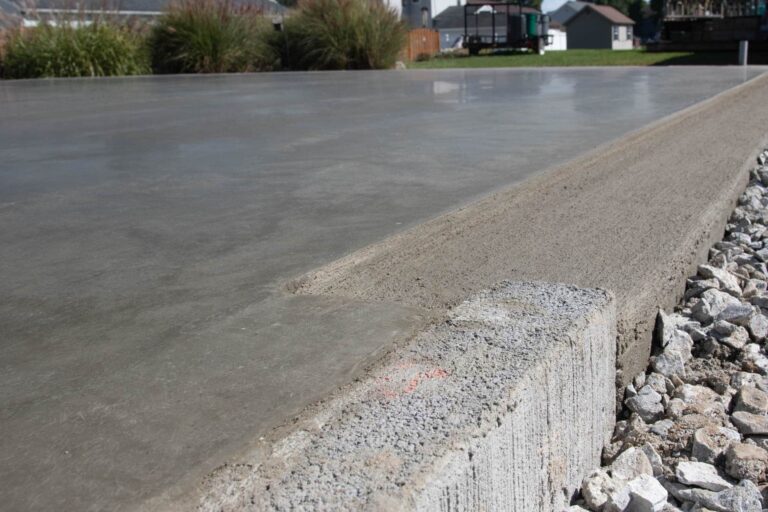
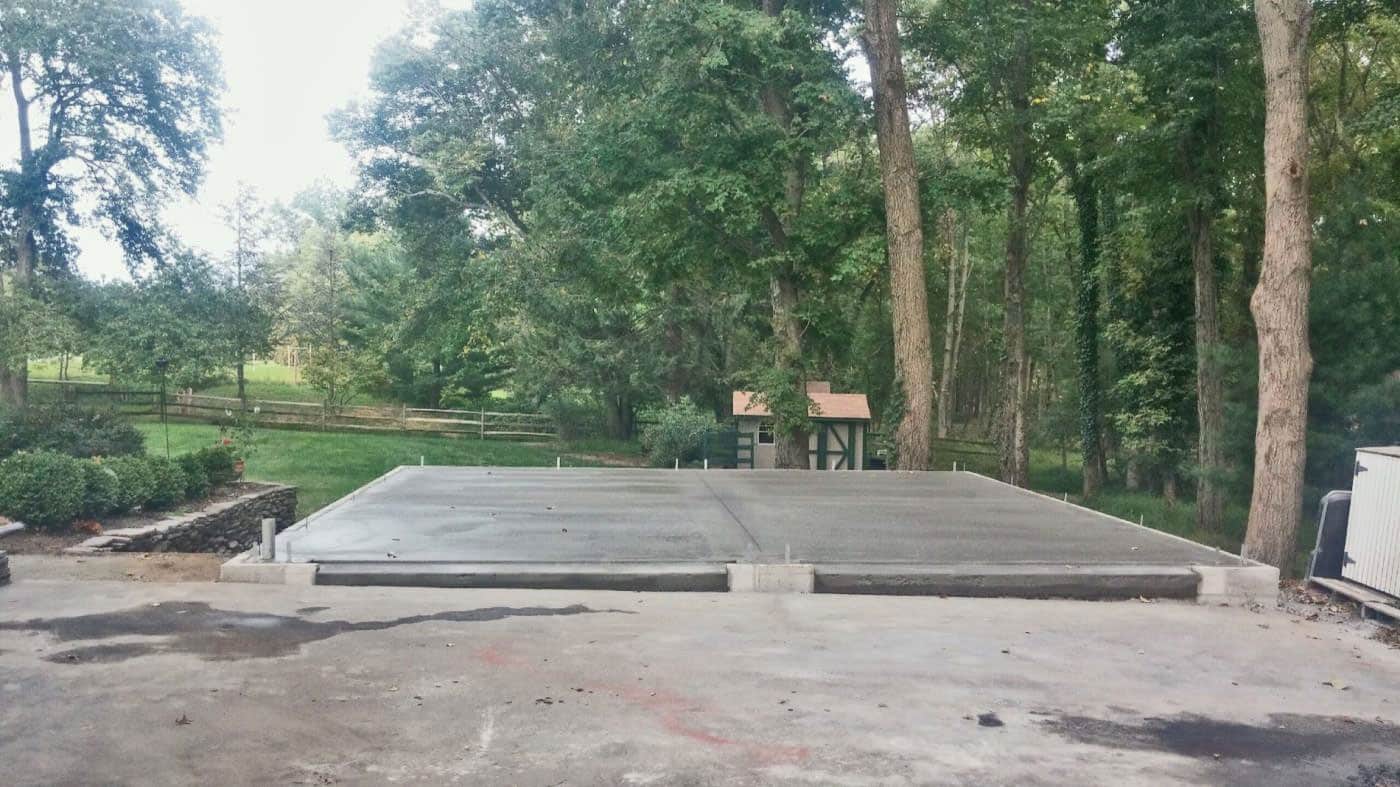
With a concrete foundation, your shed foundation should not be wider than your building; you will want to make it exactly the same size. As stated before, with a gravel pad, you will want to make your shed foundation 12″ wider than your shed on every side.
If you want a more in-depth understanding of which shed foundation to choose, check out our article on the difference between gravel and concrete shed bases.
How deep should a gravel base be for a shed?
Your gravel base should be 4-6 inches deep. Of course, we know that this is not all of the details you may be on the look-out for. So, for further understanding, feel free to read our article.
A Gravel Shed Foundation: Better All Around
Thanks for reading this article with us! We understand it’s hard to remember everything, so here are two main take-aways to store in your knowledge bank:
- A gravel foundation is your best all-around option when installing a shed or garage that comes with a floor. It will help your investment last longer and you’ll have fewer issues down the road that might come from your building settling.
- When choosing a gravel base foundation, it’s important to ensure that the foundation is 12” wider all around the building.
You may also be interested in our complete step-by-step guide for how to install a gravel shed foundation.