
Holding Tank vs. Septic Tank: Which Is Right for You?

If your property isn’t hooked up to the municipal sewer, you’ve got a decision ahead. And honestly? It’s bigger than most people realize. Choosing between a holding tank vs septic system affects everything – your budget, your daily routine, even your property value.
Both systems handle household wastewater. But that’s where the similarities end. Let’s dig into the difference between septic tank and holding tank setups so you can figure out what actually fits your situation.
Table of Contents
What Is a Septic Tank and How Does It Work?
A septic tank is an in ground treatment system – and the keyword here is treatment. It doesn’t just collect waste; it actively processes it.
Here’s what happens when wastewater leaves your house: it flows through a large-diameter pipe into an underground tank (usually concrete, fiberglass, or polyethylene). Inside, natural separation occurs. Heavy solids sink to the bottom as sludge. Grease and oils float up as scum. The middle layer – liquid effluent – is relatively clear water.
Septic tanks aren’t hollow containers. They include inlet baffles that direct wastewater downward, partition walls separating compartments, outlet baffles drawing liquid toward the drain field, and effluent filters trapping fine particles. Anaerobic bacteria break down organic matter over time, producing gases like methane and hydrogen sulfide that escape through your home’s plumbing vents.
The treated effluent disperses into a drain field through perforated pipes. You’ll need pumping every 3–5 years – but otherwise, the system runs itself. Over 21 million U.S. households rely on septic systems. If you’re exploring different kinds of septic systems, traditional setups remain the go-to for permanent residences.
What Is a Holding Tank and How Does It Work?
So what is a holding tank for septic purposes? Think of it as a sealed storage vessel – nothing more, nothing less. A holding tank sewer system collects all household wastewater (toilets, sinks, showers, washing machines) and holds it until a pump truck arrives. No treatment. No drain field. No bacteria doing the heavy lifting.
Wastewater enters through an inlet valve, accumulates inside, and stays there until pumping day. There’s no biological process happening – unlike septic tanks where microbes digest organic matter, holding tanks simply store raw sewage unchanged. When the alarm triggers (or your schedule says it’s time), you call a pumping service. They arrive with a vacuum truck, empty the tank, and haul everything to an approved disposal facility.
The Difference Between Holding Tanks and Septic Tanks
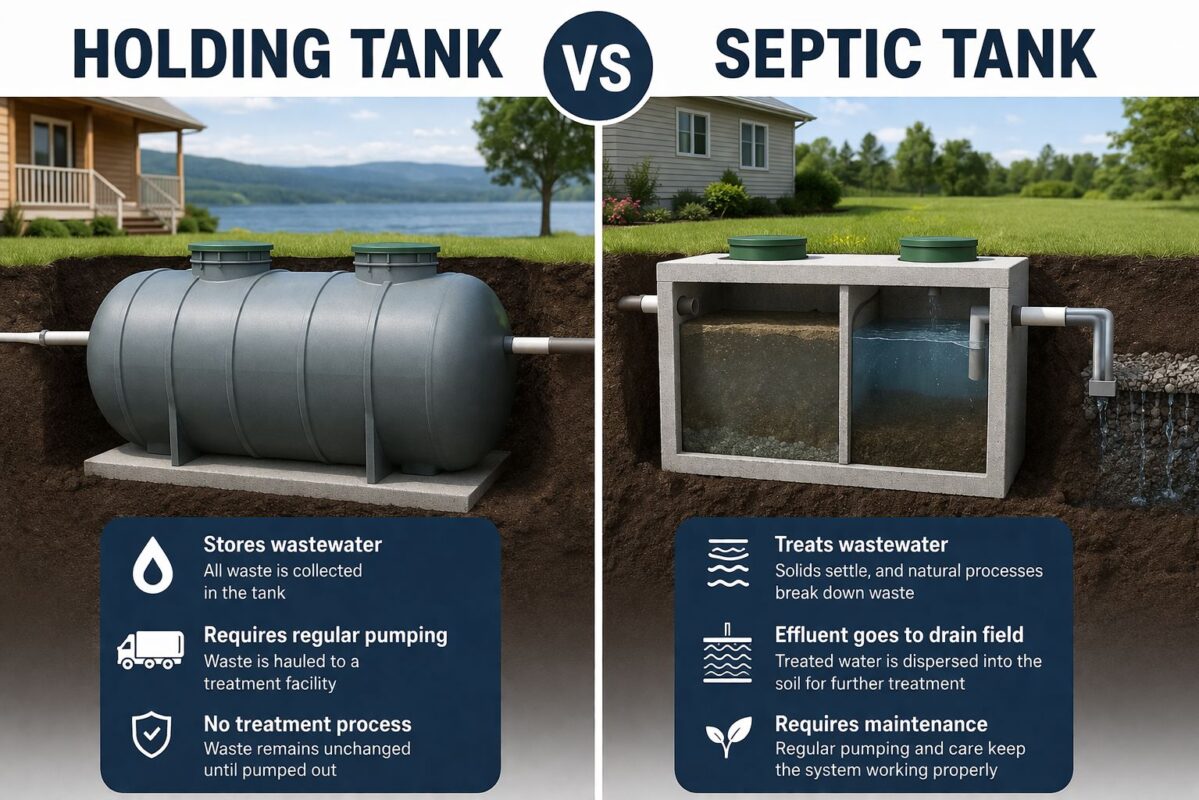
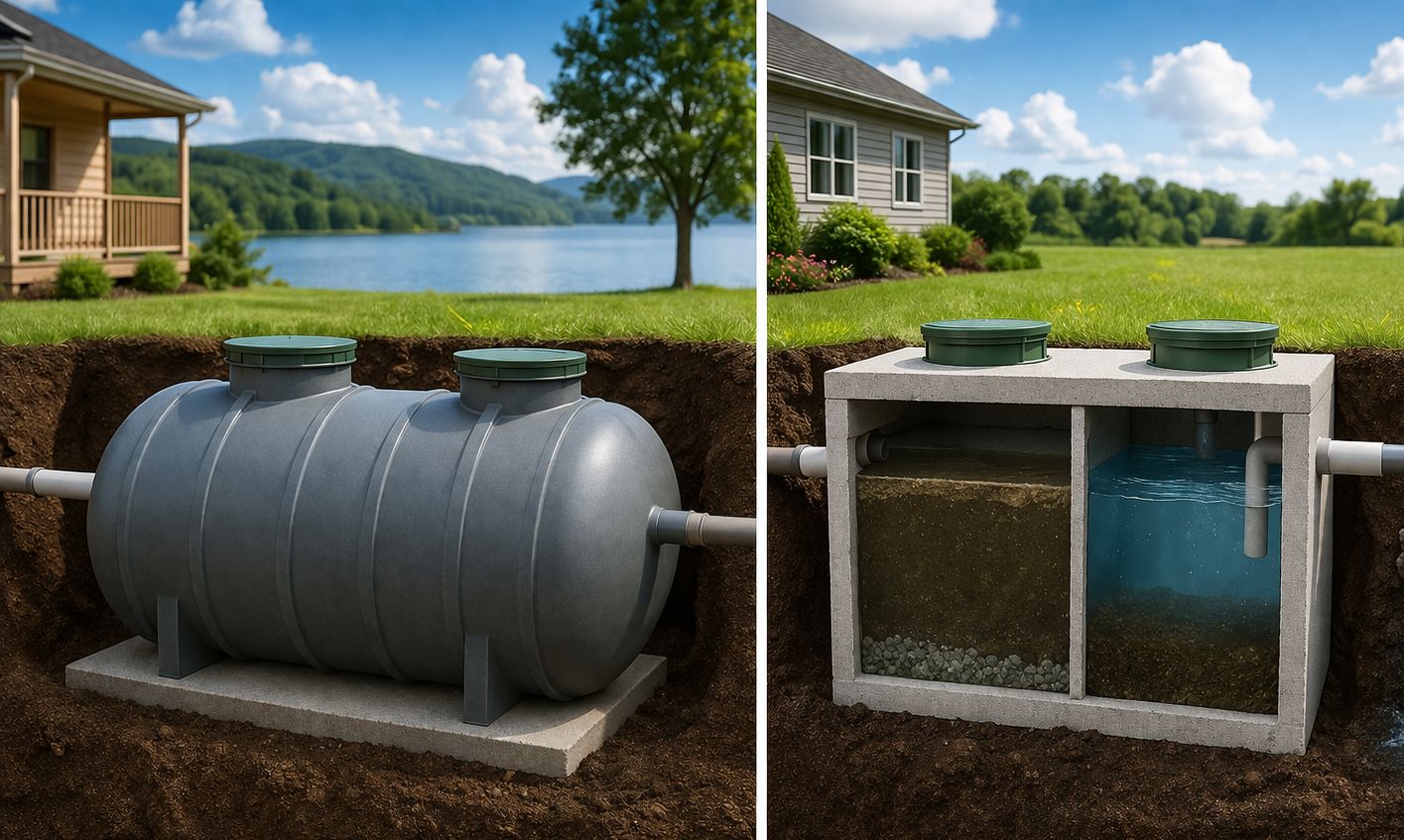
These two systems differ in design, function, and long-term operation. Here’s a side-by-side comparison:
| Feature | Holding Tank | Septic Tank |
|---|---|---|
| Number of lids | Usually 1 | Usually 2 |
| Compartments | Single | Two (divided by partition wall) |
| Outlet pipe | None – completely sealed | Yes – connects to drain field |
| Internal baffles | None | Inlet and outlet baffles |
| Treatment | No biological process | Anaerobic bacteria break down waste |
Holding tanks are simpler by design, which makes them suitable for specific situations:
- Single compartment design – no partition walls needed
- High-level alarm – float sensor alerts you at ~90% capacity to prevent overflow
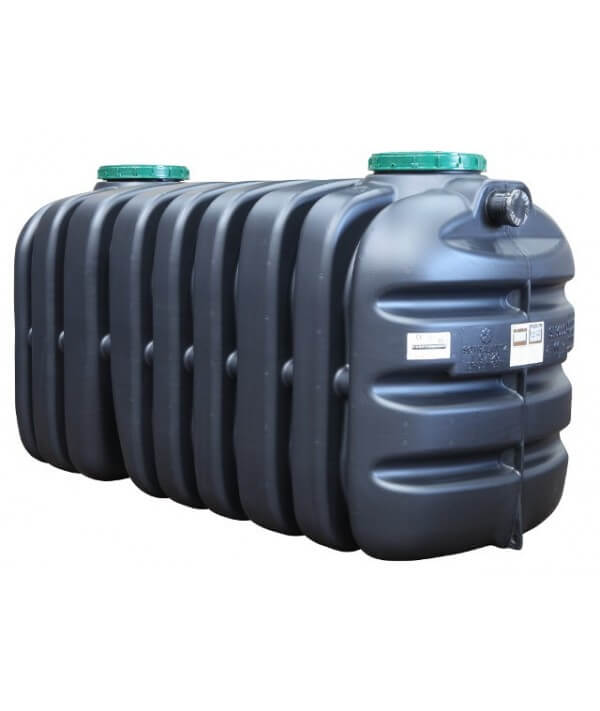
- Water-tight construction – typically plastic or fiberglass
- No outlet pipe – everything stays inside until pumping
That alarm isn’t optional. Without it, you risk sewage backing up into your home or contaminating the environment.
A holding tank for a house works best in scenarios where traditional septic isn’t practical:
- Vacation cabins with low, seasonal usage
- Properties with poor soil – clay, high water table, bedrock close to surface
- Temporary setups – new construction before permanent systems go in
- RVs, boats, and trailers – where space and permanence aren’t options
- Areas where regulations prohibit septic due to environmental sensitivity
Some homeowners use holding tank septic systems as a bridge solution while waiting for municipal sewer connections. No drain field means reduced excavation service costs upfront – but frequent pump-outs offset those savings quickly.
Septic Tank vs Holding Tank – Which One to Choose?
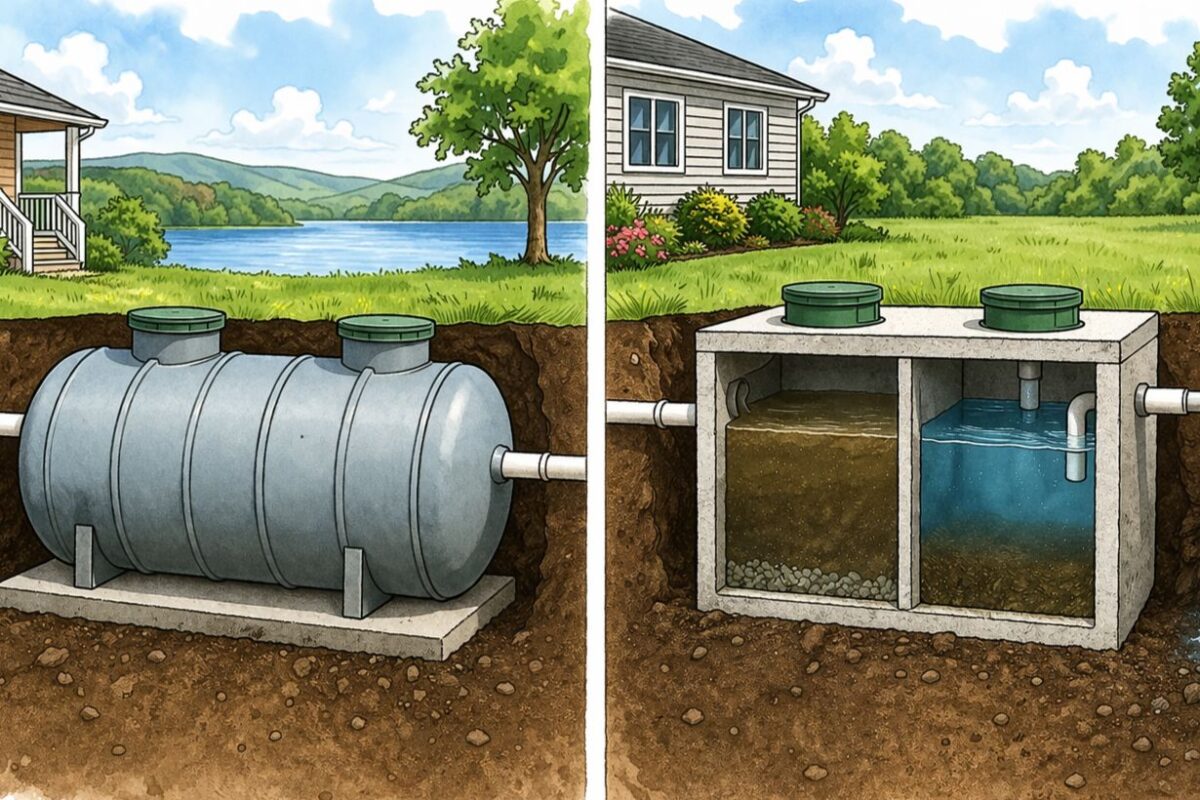
The septic vs holding tank decision comes down to how you’ll use the property, what your land can handle, and what fits your budget over time.
Purpose and Usage Differences
Septic tanks treat and disperse wastewater continuously. Holding tanks simply store it. If you’re living in a home full-time with a family of four, a holding tank would need pumping every few weeks – that adds up fast.
Efficiency Comparison
A well-maintained septic system handles thousands of gallons between pump-outs. Holding tanks? Their efficiency depends entirely on your water usage habits and tank size. Every flush, every shower, every load of laundry fills that tank a little more.
When to Use Each System
The right choice depends on your specific circumstances.
Choose a septic tank when:
- The property is your primary, full-time residence
- Soil percolation tests show adequate drainage
- You have sufficient space for a drain field
- You want lower long-term operating costs
Consider a holding tank when:
- You have a seasonal or vacation property with minimal usage
- Soil testing reveals poor percolation (clay, rock, high water table)
- Space limitations prevent drain field installation
- You need a temporary solution during construction
Advantages and Disadvantages of Septic Tanks
Septic systems have been the standard for rural wastewater management for decades – and for good reason. But they’re not without trade-offs.
Pros
Septic tanks offer several significant benefits for homeowners:
- Autonomous operation – works continuously between pump-outs
- Long-term cost-effectiveness – minimal ongoing expenses over 20–30 years
- Environmentally sound when properly maintained
- Adds property value – buyers prefer septic over holding tanks
- Independence – works anywhere with suitable soil, no municipal connection needed
Cons
That said, septic systems come with real downsides:
- High installation cost – $12,500–$22,000 including drain field
- Ongoing maintenance needs – pumping, inspections, occasional repairs
- Requires suitable land – right soil type, adequate space, proper slope
- Complex repairs if something fails (though a qualified septic system contractor handles most issues)
Advantages and Disadvantages of Holding Tanks
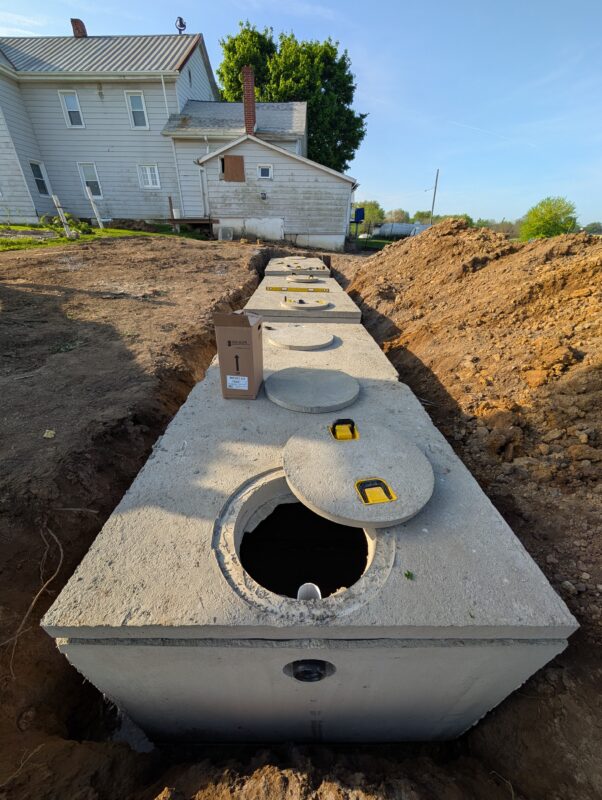
Holding tanks solve problems that septic systems can’t – but the trade-offs are significant, especially for full-time residents.
Pros
For the right situation, holding tanks offer clear advantages:
- Low installation cost – typically $6,500–$8,000 total
- Simplicity – just a pipe and a tank, fewer things to go wrong
- Works on any soil type – no percolation requirements
- Compact footprint – no drain field needed
- Can last decades if properly maintained
Cons
The downsides become apparent over time:
- Frequent pumping – every 1–4 weeks for full-time residences
- Higher long-term maintenance costs – easily $6,000+ annually in pumping fees
- Stricter regulations in many states (some prohibit them entirely for primary homes)
- No property value boost – often seen as a drawback by buyers
- Environmental risk if alarm fails or pumping lapses
Installation and Maintenance Costs of Septic and Holding Tanks
Understanding the true cost means looking beyond the initial price tag. The holding tank installation cost looks attractive at first – until you calculate ongoing expenses.
Breakdown of Installation Costs
Both systems require tank purchase, permits, materials, and labor – but septic adds drain field construction.
Holding tank total: $6,500–$8,000
- Tank purchase: $1,500–$3,000
- Permits: $200–$500
- Materials and piping: $500–$1,000
- Labor: $2,000–$3,500
Septic system total: $12,500–$22,000
- Tank purchase: $1,500–$4,000
- Drain field installation: $5,000–$10,000
- Soil tests and design: $1,000–$2,000
- Permits: $300–$800
- Labor: $3,000–$6,000
The difference? Septic systems require excavation service for the drain field, plus materials like gravel and sand.
Comparison of Long-Term Maintenance Costs
Pumping rates vary by region and tank size, typically calculated per gallon:
- 500 gallons: ~$0.40/gallon ($200 per pump-out)
- 1,000 gallons: ~$0.32/gallon ($325 per pump-out)
- 2,000+ gallons: ~$0.28/gallon ($560 per pump-out)
Holding tank (2,000 gal, monthly pumping): $560 × 12 = $6,720/year Septic tank (pumped every 3 years): $375 ÷ 3 = $125/year
Over a decade: $67,200 for holding tank vs. $1,250 for septic. The cost of sewer line repair aside, operating expenses differ dramatically.
How Often Should a Septic Tank and Holding Tank Be Pumped?
Regular pumping keeps both systems functioning properly – but the schedules couldn’t be more different.
Septic Tank Pumping Frequency
Most septic tanks need pumping every 3–5 years under normal conditions. Factors that increase frequency:
- Larger household (more people = more waste)
- Garbage disposal use (adds solids faster)
- Smaller tank capacity
- High water usage habits
Holding Tank Pumping Frequency
Holding tanks require pumping every 1–4 weeks for full-time residential use. Variables include:
- Tank capacity (1,000 vs. 2,000 gallons makes a big difference)
- Number of occupants
- Water conservation habits
- Seasonal vs. year-round occupancy
Vacation homes might stretch to monthly or quarterly – but only with genuinely minimal usage.
What Permits Are Required for Septic and Holding Tanks?
Both systems require permits before installation – no exceptions. But the process and requirements differ significantly between them.
Septic Tank Permits
Septic permit applications typically require documentation proving your site can support the system:
- Site assessment and soil percolation testing
- Design plans for the complete system
- Health department approval
- Installer credentials verification
Timeline: Usually a few days to a few weeks.
Holding Tank Permits
Some jurisdictions make holding tank permits harder to obtain, not easier. Because these tanks pose environmental risks if not maintained, certain areas require:
- Posting a bond – financial guarantee against neglect
- Proof of regular pumping – you may need to submit receipts
- Annual inspections
- Special permits beyond standard building approvals
Why the extra scrutiny? Authorities worry homeowners will skip pump-outs to save money, leading to overflows and contamination. The bond ensures funds exist for emergencies. Some states discourage or prohibit holding tanks for primary residences entirely.
Conclusion: Which System Is Right for You?
The septic tank vs holding tank question comes down to three things: how you’ll use the property, what your land can support, and what you’re willing to spend – both now and over time.
For permanent homes with suitable soil? Septic wins on long-term value, convenience, and property appeal. For vacation cabins, challenging sites, or temporary needs? A holding tank sewer solution might be your only practical option.
Still weighing your choices? The Site Prep team can assess your property conditions, walk you through local permit requirements, and help you make a decision that works for years to come.