


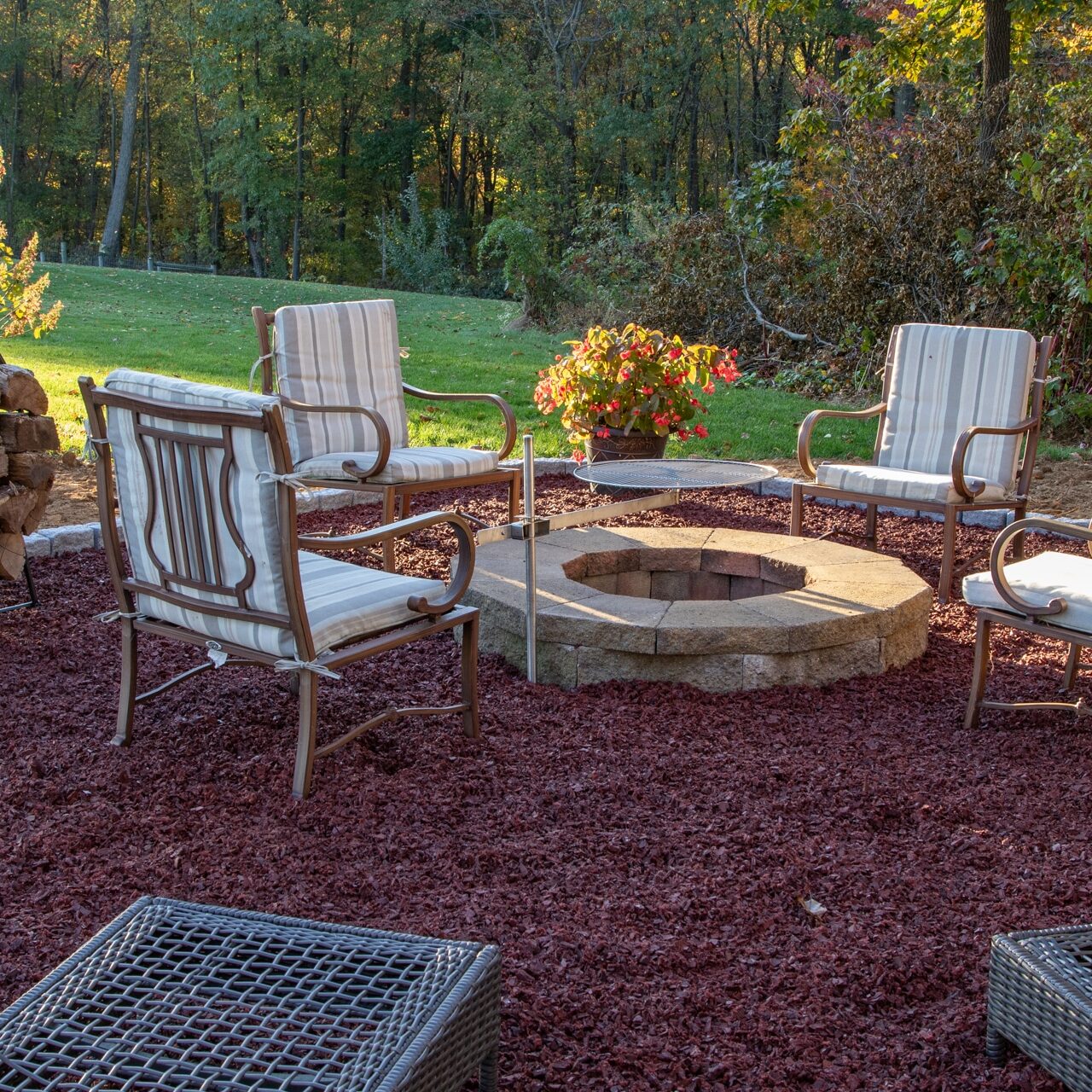
Thinking about adding a fire pit to your backyard? The first question is always about cost — and for good reason. The national average is $850, but that’s just the middle of the road. Reality? Most homeowners spend between $300 and $2,500 depending on what they’re building.
Here’s what drives your final number: type (portable runs cheap, in-ground costs more), size (36-inch vs. 48-inch is a $500+ difference), materials (concrete or premium stone?), fuel source (wood-burning or gas line installation), and whether you’re DIYing or hiring professionals. Foundation work matters too — skip it and you’ll pay for repairs later.
Table of Contents
Average Fire Pit Costs
Let’s cut through the confusion and look at the real numbers. Here’s what the cost to install a fire pit actually looks like when you break it down:
| Cost Category | Amount |
|---|---|
| National Average | $850 |
| Typical Range | $300 – $2,500 |
| Low-End Cost | $200 |
| High-End Cost | $5,000+ |
| Installation (Labor Only) | $200 – $900 |
| Materials Only | $150 – $3,000 |
The average cost to install fire pit setups is $850, with installation representing about half that total. Most homeowners spend $300-$2,500 depending on materials, type, size, fuel source, and labor costs.
What you get at different price points:
Basic above-ground units start under $200. Quality gravel fire pit area setups with proper foundation can be built for under $600 — the budget sweet spot.
Mid-range ($800-$1,500) delivers professional installation with materials lasting 15-20 years. Built-in designs with stone and custom features push $2,000+. Premium installations with natural stone and gas lines hit $5,000+.
The cost of outdoor fire pit projects depends on your priorities. Portable and simple? A few hundred dollars. Permanent centerpiece? Invest $1,500-$3,000 for decades of use and added property value.
Fire Pit Cost by Type
The type of fire pit you choose has the biggest impact on your budget. Let’s break down the three main categories and what you’re really getting for your money.
Above-Ground Fire Pits (Cost Range: $200 – $1,500)
Above-ground fire pits dominate the market for good reason — affordable, versatile, no major excavation. These free-standing units sit on patios or prepared gravel bases.
Basic steel models start at $200 for casual use. Mid-range options ($500-$800) deliver better materials and design. High-end stainless steel with professional finishes hits $1,200-$1,500.
Most customers land in the $400-$800 range — solid construction, 36-40 inch size, 10-15 year lifespan with proper care. Pair it with a proper gravel fire pit area base and you’ve got a setup that looks intentional, not dropped randomly on your patio.
Installation is straightforward. Professionals charge $200-$400 for site prep and setup. DIY? Handle leveling and gravel yourself for under $150 in materials.
Pros:
- Budget-friendly starting point
- No excavation required
- Can be moved if needed (lighter models)
- Quick installation (same day)
- Wide variety of styles available
Cons:
- Less durable than in-ground options
- Can tip over if not secured properly
- Limited customization
- May not add as much home value
In-Ground Fire Pits (Cost Range: $1,000 – $3,000)
Permanent backyard features built directly into your landscape. These require excavation (12-18 inches deep), proper drainage, solid foundation, and underground-capable materials — stone walls, brick liners, custom concrete work.
Cost Breakdown:
- Basic concrete: $1,000-$1,500
- Brick/stone veneer: $1,500-$2,200
- Premium natural stone: $2,000-$3,000+
At Site Prep, most in-ground projects run $1,800-$2,500 including excavation, drainage, concrete foundation, and stone or brick facing.
Excavation and soil removal, foundation installation, drainage systems, material transport, professional masonry work. Not a weekend DIY project — most builds take 2-3 days with professional crews.
The cost of building a fire pit this way delivers value though. In-ground installations are safer (built-in containment walls), more wind-resistant, and genuinely boost property value. Strong ROI for homes where outdoor living matters.
Pros:
- Safest option (built-in containment)
- Highly customizable design
- Adds significant home value
- Wind-protected flames
- Feels like a true outdoor room feature
Cons:
- Highest upfront cost
- Permanent location
- Complex installation
- May require permits and inspections
- Not DIY-friendly for most people
Portable Fire Pits (Cost Range: $75 – $900)
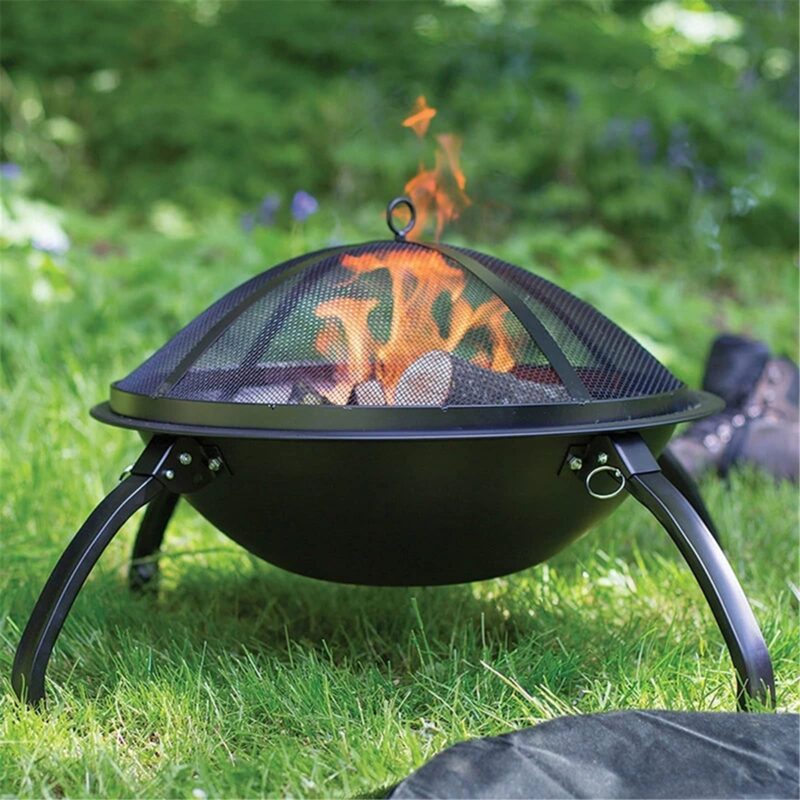
Want flexibility? Portable fire pits let you move the party wherever you need it. These range from basic metal bowls to high-end tabletop designs.
1. Basic Steel Bowls: $100-$300
These are your entry-level option. Simple metal construction, functional design, nothing fancy. Perfect for renters, small spaces, or testing out whether you’ll actually use a fire pit before committing to something permanent.
2. Decorative Ceramic/Tabletop: $250-$500
Step up to better materials and design. Ceramic bowls, powder-coated finishes, integrated stands. These look intentional on a patio and handle regular use better than basic models.
3. Deluxe Sets with Accessories: $400-$900
High-end portable units come with spark screens, log racks, protective covers, and premium materials like copper or thick-gauge steel. Some even include cooking grates and tool sets. These compete with above-ground models in quality but maintain portability.
The Practical Reality
Portable fire pits work great if you’re not ready to commit to a permanent installation or need flexibility. Apartment dwellers, renters, or homeowners who like to rearrange their outdoor space appreciate this option.
The downside? They’re not as durable, can’t handle the same heat intensity, and won’t add resale value like a built-in feature. Think of them as outdoor furniture rather than a landscape investment.
Type Comparison: Making the Choice
Here’s how these options stack up when you’re trying to decide:
| Feature | In-Ground | Above-Ground | Portable |
|---|---|---|---|
| Initial Cost | $1,000-$3,000 | $200-$1,500 | $75-$900 |
| Installation Time | 2-3 days | 4-8 hours | None |
| Lifespan | 20-30+ years | 10-20 years | 3-10 years |
| Home Value Impact | High | Medium | None |
| Safety Level | Highest | Medium | Lowest |
| DIY-Friendly? | No | Moderate | Yes |
| Flexibility | None (permanent) | Limited | Complete |
In-Ground vs. Above-Ground: The Real Difference
Beyond cost, here’s what actually matters in daily use:
In-Ground Wins On:
- Safety — retaining walls keep flames contained, no tipping risk
- Aesthetics — looks like it belongs there, not added as an afterthought
- Customization — match your home’s style, integrate with patio design
- Long-term value — buyers notice and appreciate permanent features
Above-Ground Wins On:
- Affordability — half the cost or less
- Flexibility — don’t like the location? Move it
- Quick setup — installed and ready same day
- Lower commitment — test it out before going permanent
Our Take
If you’re planning to stay in your home for 5+ years and use the fire pit regularly, in-ground makes sense. The cost to install a gas fire pit (which almost always requires in-ground installation) is higher, but the convenience factor can’t be beat.
If you’re testing the waters, renting, or want something you can take with you… above-ground or portable is your move.
Budget around $800-1,200 for a quality above-ground setup with proper site preparation, or $1,800-2,500 for an in-ground installation that’ll last decades. Either way, don’t skip the foundation work — that’s where most DIY projects go wrong and end up costing more in the long run.
Fire Pit Cost by Size
Size matters more than you might think. A few extra inches in diameter can add hundreds of dollars to your project — and we’re not just talking about the fire pit itself.
Here’s the breakdown of what different sizes actually cost:
| Diameter | Cost Range | Seats Comfortably | Best For |
|---|---|---|---|
| 36 inches (Small) | $200 – $900 | 2-4 people | Cozy gatherings, small patios |
| 40 inches (Medium) | $165 – $1,300 | 4-5 people | Standard family use |
| 44 inches (Medium-Large) | $165 – $1,600 | 5-6 people | Regular entertaining |
| 48 inches+ (Large) | $250 – $2,000+ | 6-8 people | Large gatherings, spacious yards |
Small Fire Pits (Cost: $200 – $900)
A 36-inch fire pit is perfect for intimate settings. Two to four people can comfortably gather around, making it ideal for couples or small families. This is the most popular DIY size because it’s manageable without feeling cramped.
For a basic setup — think metal bowl on a simple gravel base — you’re looking at $200-$300. Want something more polished? Add proper site prep, decorative stone, and quality materials, and you’re in the $500-$700 range. Professional installation pushes the upper end to $800-$900.
The DIY Fire Pit Cost Advantage
This size is genuinely DIY-friendly. You can build a decent concrete block or brick ring for $150-$250 in materials. Add another $100-$150 for gravel, sand, and leveling supplies. Total? Under $400 if you’re willing to put in a weekend of work.
Professional help can create beautiful 36-inch gravel fire pit areas for $500-$650 total — including proper base preparation that’ll last years.
Medium Fire Pits (Cost: $165 – $1,600)
The sweet spot for most families. A 40-44 inch fire pit handles regular use without feeling oversized, and the price makes sense for what you’re getting.
That $165 low-end? Basic portable metal bowl. Reality check — quality medium fire pits with proper installation run $600-$1,200 depending on materials and whether you DIY or hire professionals.
Typical $900 Installation Breakdown:
- Fire pit materials (brick/concrete): $250-$350
- Gravel base and site prep: $150-$200
- Professional labor: $300-$450
- Accessories (screen, poker, cover): $100-$150
Four to six people fit comfortably — perfect for family gatherings or weekend hangouts. Large enough for good heat output, not so big you’re wasting fuel for small groups. The cost of building a fire pit this size justifies the versatility.
You’ll need 14-16 feet total space including clearance. Foundation matters here — don’t skimp. Proper 4-6 inch gravel base or concrete pad prevents settling and cracking.
Professional installation: 6-10 hours.
DIY: plan a full weekend, especially with stone or brick work.
Large Fire Pits (Cost: $250 – $2,000+)
Now we’re building a statement piece. Large fire pits become the focal point of your outdoor space — and they cost accordingly.
That $250 low-end number? It’s a basic metal ring, nothing more. For a proper large fire pit installation with quality materials and professional work, you’re starting at $1,000 minimum and often hitting $1,500-$2,000+.
Everything scales with size:
- Materials: A 48-inch stone fire pit requires significantly more material than a 36-inch version. We’re talking 50-75% more stone, brick, or concrete.
- Labor: Bigger fire pits mean more excavation, more heavy lifting, more time on site. Labor costs can jump from $300 to $800+ for large installations.
- Foundation: You can’t skimp here. A 48-inch fire pit needs a robust concrete pad (6 inches thick, reinforced) or a deep, well-compacted gravel base. That’s $500-$800 just for the foundation.
- Site Prep: Larger fire pits need more clearance — you’re looking at 18-20 feet of total space. This often means more extensive patio work, landscaping, or hardscaping around the fire pit.
If you’ve got the space and regularly entertain 8-10+ people, a large fire pit is worth the investment. The heat output is substantial (important for cooler climates), and it genuinely transforms your backyard into an entertainment destination.
Several 48+ inch installations show that homeowners who invest in them tend to use them constantly. Birthday parties, neighborhood gatherings, holiday celebrations — they become the go-to venue.
The Cost of Stone Fire Pit at This Size
Natural stone in a 48-inch diameter? You’re easily at $2,500-$4,000 for premium materials and expert masonry work. But the result is stunning — a custom backyard feature that looks like it cost even more than it did.
Size Selection: Getting It Right
Here’s what most people get wrong about size: they focus on the fire pit itself and forget about everything around it.
The Real Space Math:
- Fire pit diameter: 36-48 inches
- Safe clearance zone: 10 feet minimum from structures
- Seating area: 3-4 feet around the perimeter
- Walking paths: 3-4 feet for comfortable movement
So a 36-inch fire pit actually needs about 20 feet of dedicated outdoor space when you factor everything in. A 48-inch pit? You’re looking at 24-26 feet.
Our Recommendation
Measure your available space first, then work backward. Most backyard patios (12×12 to 16×16 feet) work best with 36-40 inch fire pits. Large yards (20×20 feet or bigger patio areas) can handle 44-48 inch models comfortably.
Don’t let sales pressure push you into a larger size than you need. A properly sized 40-inch fire pit provides plenty of warmth and ambiance for most families — and saves you $500-$1,000 compared to going bigger.
Budget-Conscious Sizing
Start with a smaller fire pit and invest the savings in quality materials and proper installation. A 36-inch natural stone fire pit with excellent site prep beats a poorly installed 48-inch concrete pit every time.
The average cost to install fire pit setups in the 36-40 inch range ($600-$1,200) delivers the best value for most homeowners. You get adequate size, manageable costs, and a feature that’ll see regular use without overwhelming your space or budget.
Fire Pit Cost by Material
The material you choose affects upfront cost, durability, and maintenance. Here’s what each option actually costs and what you’re getting for your money.

Concrete Fire Pits (Cost: $150 – $800)
Concrete is the budget-friendly workhorse — affordable, versatile, and durable when done right.
DIY Material Costs:
- Concrete blocks or premixed bags: $4.50 – $27 per bag (need 8-12 bags)
- Fire-rated liner or firebrick: $40-$80
- Mortar mix: $7 per 60-pound bag (need 3-4 bags)
- Capstones: $50-$100
- DIY Total: $150-$300
Professional installation adds $200-$500 depending on complexity and decorative finishes.
Why Concrete Fire Pit:
You can shape it into anything — round, square, curved seating walls, integrated benches. Poured concrete offers maximum design flexibility. Everything from simple rings to elaborate custom designs with built-in seating is possible.
Lifespan: 15-25 years with proper maintenance (seal every 3-5 years for $50-$100)
Best For: Budget-conscious DIYers, custom shapes, projects where you’ll add decorative facing later
Watch Out For: Requires sealing, can crack without proper foundation, may look utilitarian without finishing touches
Stainless Steel Fire Pits (Cost: $250 – $1,200)
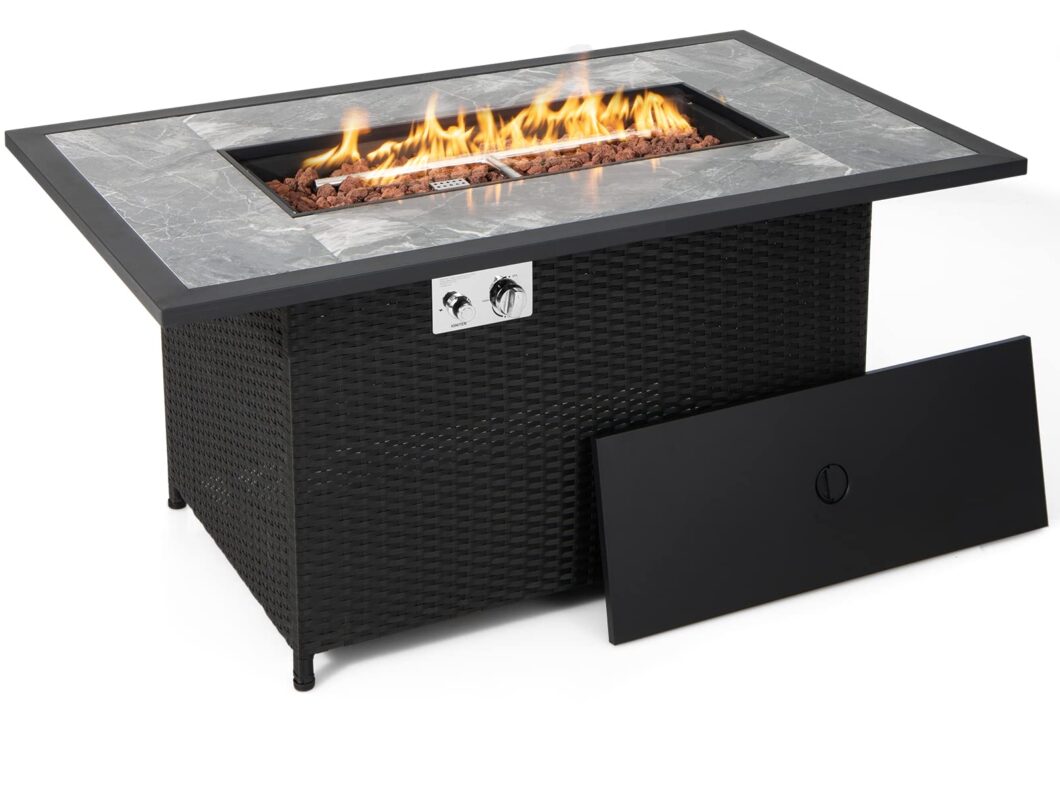
Steel brings sleek, contemporary style with minimal maintenance requirements.
Price Tiers:
- Basic steel bowls: $250-$400
- Mid-range stainless: $500-$750
- High-end thick-gauge designs: $800-$1,200
Thickness matters — 14-gauge is cheaper but 10-gauge or 8-gauge lasts longer and handles heat better. Powder-coated or brushed finishes add $75-$150 but resist rust for decades.
The Big Win: Incredibly low maintenance. No sealing, no mortar joints, no cracks. Wipe it down occasionally and you’re done.
Lifespan: 20+ years
Best For: Modern homes, maintenance-averse homeowners, above-ground installations
Limitations: More expensive per square foot than concrete, limited customization for built-ins, doesn’t suit traditional styles
Brick Fire Pits (Cost: $300 – $2,200)
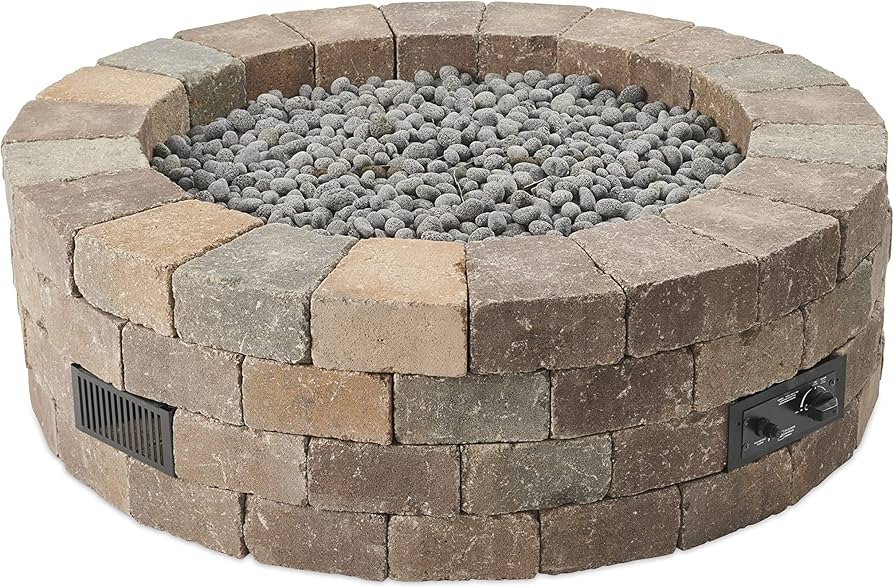
Classic brick delivers timeless appeal and superior heat resistance.
Material Breakdown:
- Standard bricks: $0.50 – $1.00 each (need 80-120 bricks)
- Firebricks (interior): $0.50 – $0.60 each
- Decorative face brick: $2.00 – $4.00 each
- Mortar and supplies: $50-$100
- DIY: $300-$500 in materials
- Professional Install: Add $400-$1,200
Handles high heat without degrading, retains warmth longer, fits virtually any backyard style from traditional to farmhouse. Quality brick fire pits last 20-30 years easily — we’ve seen 40-year-old installations still going strong.
Maintenance: Repoint mortar joints every 5-10 years ($100-$300)
Lifespan: 20-30+ years
Best For: Traditional homes, in-ground installations, areas where heat retention matters
Limitations: Requires masonry skills, mortar joints need periodic maintenance
Stone Fire Pits (Cost: $350 – $4,000)
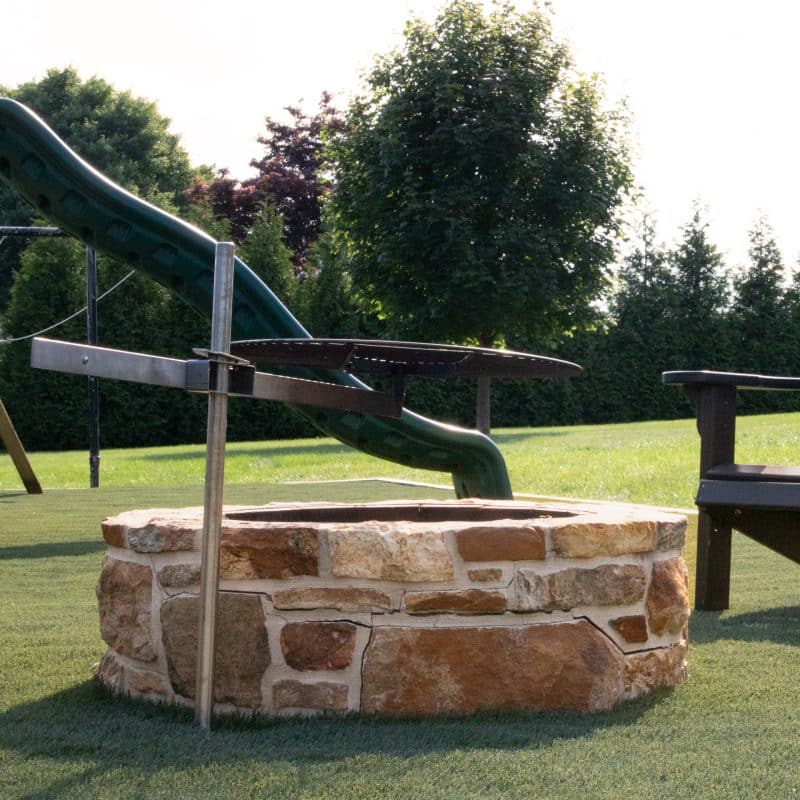
Natural stone is the premium choice — and worth every penny if it fits your budget.
Material Pricing:
- Fieldstone (natural, irregular): $350-$600 per ton
- Cut stone veneer: $800-$1,500 per ton
- Premium natural stone (granite, limestone): $1,500-$3,000+ per ton
Most fire pits need 1-2 tons of stone. Add professional installation ($800-$2,000+), and you understand why the cost of stone fire pit projects typically runs $2,000-$4,000+.
Each stone fire pit is unique — natural color variations, textures, patterns. This isn’t a commodity purchase; it’s a one-of-a-kind backyard centerpiece. Durability is unmatched at 30-50+ years with minimal maintenance.
Stone veneer over concrete block core cuts costs 30-40% while maintaining the stone appearance. Quality compromise at $1,500-$2,500 versus $2,500-$4,000 for full stone.
This requires professional expertise. Natural stone is heavy (50-150 pounds per stone), irregular, and demands an experienced mason’s eye. Labor runs $60-$80/hour for 16-24 hours of work — that’s where much of your cost goes.
Lifespan: 30-50+ years
Best For: Upscale properties, permanent installations, maximizing resale value
ROI: Stone delivers the highest return — it’s a legitimate selling point that real estate agents mention in listings.
Making the Right Choice
| Material | Cost | Durability | Maintenance | DIY-Friendly? | Best Use |
| Concrete | $150-$800 | 15-25 yrs | Medium | Yes | Budget builds, custom shapes |
| Steel | $250-$1,200 | 20+ yrs | Very Low | Yes (above-ground) | Modern designs |
| Brick | $300-$2,200 | 20-30 yrs | Medium | Moderate | Traditional styles |
| Stone | $350-$4,000 | 30-50+ yrs | Very Low | No | Premium installations |
Here’s how to think about your material decision based on budget and priorities:
- Budget-Conscious? Concrete or basic steel ($150-$500)
- Best Value? Brick or stone veneer ($500-$1,500)
- Premium Investment? Full natural stone ($2,000-$4,000+)
Many homeowners use a hybrid approach — affordable core structure with upgraded visible surfaces. Concrete block base + stone veneer facing delivers upscale appearance at reasonable cost. This is done regularly in professional installations.
Your foundation matters as much as your material choice. A stone fire pit on weak foundation will crack. A concrete pit on properly compacted gravel outlasts premium materials on poor prep. Don’t skip the gravel fire pit area base work ($100-$300) or concrete pad ($500-$2,000) — it protects your entire investment.
Fire Pit Cost by Fuel Type
Your fuel choice affects installation costs, ongoing expenses, and convenience. Here’s what each option costs upfront and over time.
| Fuel Type | Installation | Cost Per Use | Annual Cost (20 uses) | Convenience | Heat Output |
|---|---|---|---|---|---|
| Charcoal | $250-$350 | $10-$20 | $200-$400 | Low | Medium |
| Wood | $300-$1,000 | $5-$15 | $100-$300 | Low | High |
| Propane | $300-$950 | $3-$8 | $60-$160 | High | Medium |
| Electric | $350-$1,500 | $0.10-$0.30 | $10-$40 | Very High | Low |
| Natural Gas | $400-$3,000 | $0.50-$1.00 | $20-$40 | Very High | Medium-High |
Charcoal Fire Pits (Installation Cost: $250 – $350)
The least expensive fuel option — typically hybrid setups that double as grills. Simple structure (steel or basic brick) keeps costs down. No gas lines or electrical work needed.
Operating Costs: $10-$20 per use | $200-$400 annually (20 uses)
Reality Check: Takes 20-30 minutes to heat up, messier cleanup with ash, but delivers authentic BBQ flavor.
Best For: Grilling enthusiasts, occasional users, budget-conscious buyers
Wood-Burning Fire Pits (Installation Cost: $300 – $1,000)
The classic choice and still most popular. Installation ranges from basic above-ground ($300-$500) to professional in-ground with proper site prep ($700-$1,000).
Operating Costs: $5-$15 per fire | $100-$300 annually
This is authentic campfire experience — the smell, crackling sounds, real flames. It’s what most people picture when they think “fire pit.” Smoke comes with the territory (lots of it), and wind direction matters. You’ll need firewood storage space and regular ash cleanup.
Some areas have burn bans during high fire danger days. Wood fires produce more heat than gas alternatives but also cause more wear on materials — expect higher maintenance down the road.
Propane Fire Pits (Installation Cost: $300 – $950)
The convenience sweet spot — no permanent gas lines, but all the benefits of gas fuel.
Cost Breakdown:
- Basic portable: $300-$450
- Mid-range table-style: $500-$700
- High-end built-in: $700-$950
- First propane tank: $50-$150
Operating Costs: $3-$8 per use | $60-$160 annually
A 20-pound propane tank gives 8-10 hours of burn time at $20-$30 per refill.
The Appeal:
Push-button ignition, instant flames, adjustable heat, no smoke, no ash, no cleanup. Move it if you don’t like the location. Take it with you if you move.
Limitations: Less intense heat than wood, flames look slightly artificial (decorative lava rock helps), need to monitor tank levels.
Best For: Convenience-seekers, smoke-sensitive neighbors, portable setups, apartment/condo dwellers
Electric Fire Pits (Installation Cost: $350 – $1,500)
Safest and cleanest option with LED flame effects and heating elements.
Installation Needs:
Requires electrical access. If installing away from your house:
- Underground conduit: $200-$500
- Outdoor-rated outlet: $150-$300
- Total electrical work: $300-$500 additional
Operating Costs: $0.10-$0.30 per hour | $20-$60 annually (cheapest fuel option)
Honest Reality:
Electric fire pits don’t produce much heat — they’re about ambiance, not warmth. Even models with built-in heaters provide minimal heating. Don’t expect to extend your outdoor season significantly.
Best For: Fire-restricted areas (apartments, condos), covered patios, maximum safety, zero maintenance
Skip If: You want real heat, authentic fire experience, or cold-weather use
Natural Gas Fire Pits (Installation Cost: $400 – $3,000)
Premium convenience option with the highest upfront cost but lowest long-term operating expenses.
Why the Range:
- Simple conversion (near existing gas line): $400-$800
- Full installation with gas line: $2,000-$3,000+
Gas Line Installation:
- Cost: $14-$25 per linear foot
- 40 feet from meter = $560-$1,000 just for the line
- Add excavation, trenching, permits, inspections
- Professional plumber required: $75-$100/hour
- Permits and inspections: $75-$200
Typical gas fire pit projects (including materials and site prep) run $2,000-$4,000 total.
Operating Costs: $0.50-$1.00 per hour | $20-$40 annually (40 uses)
The Ultimate Convenience:
Flip a switch, instant fire. Adjustable flames, consistent heat, never run out of fuel, no storage, no cleanup, no smoke. Set-it-and-forget-it operation.
Professional Installation Required: Gas line work requires licensed pros — not DIY territory. Codes are strict, inspections mandatory.
Longevity Bonus: Gas burns clean with no creosote or ash. Expect 25-30+ years lifespan versus 15-20 for wood-burning.
Best For: Permanent installations, frequent users, homes with existing gas service, long-term cost-per-use savings
Think Twice If: Fire pit is far from gas lines (installation costs spike), you want authentic wood fire experience
Fire Pit Base & Foundation Costs ($100 – $2,000)
Here’s what most people overlook — your foundation matters more than the fire pit itself. A $3,000 stone fire pit on weak foundation will crack. A $500 concrete pit on proper base will last decades.
A proper base prevents settling, manages drainage, and distributes weight evenly. Skip this step and you’re looking at $500-$2,000 in repairs within 2-5 years. Do it right once, and your fire pit lasts 20-30+ years.
Foundation Requirements by Fire Pit Type:
| Fire Pit Type | Recommended Foundation | Cost | Why |
|---|---|---|---|
| Portable metal | Fire mat or minimal gravel | $30-$150 | Heat protection only |
| Above-ground (light) | 4-6″ gravel base | $100-$300 | Drainage and stability |
| Above-ground (heavy) | 6″ gravel or concrete | $300-$800 | Weight support |
| In-ground (wood) | Reinforced gravel | $200-$500 | Heat and drainage |
| In-ground (stone) | 4-6″ concrete pad | $500-$1,500 | Maximum stability |
| Gas fire pit | 6″ reinforced concrete | $700-$2,000 | Code requirement |
Note: Gas installations require concrete — this isn’t optional. Building codes mandate solid base for gas line protection.
Foundation preparation is critical — it’s the difference between projects that last and projects that fail.
Gravel Base (Cost: $100 – $300)
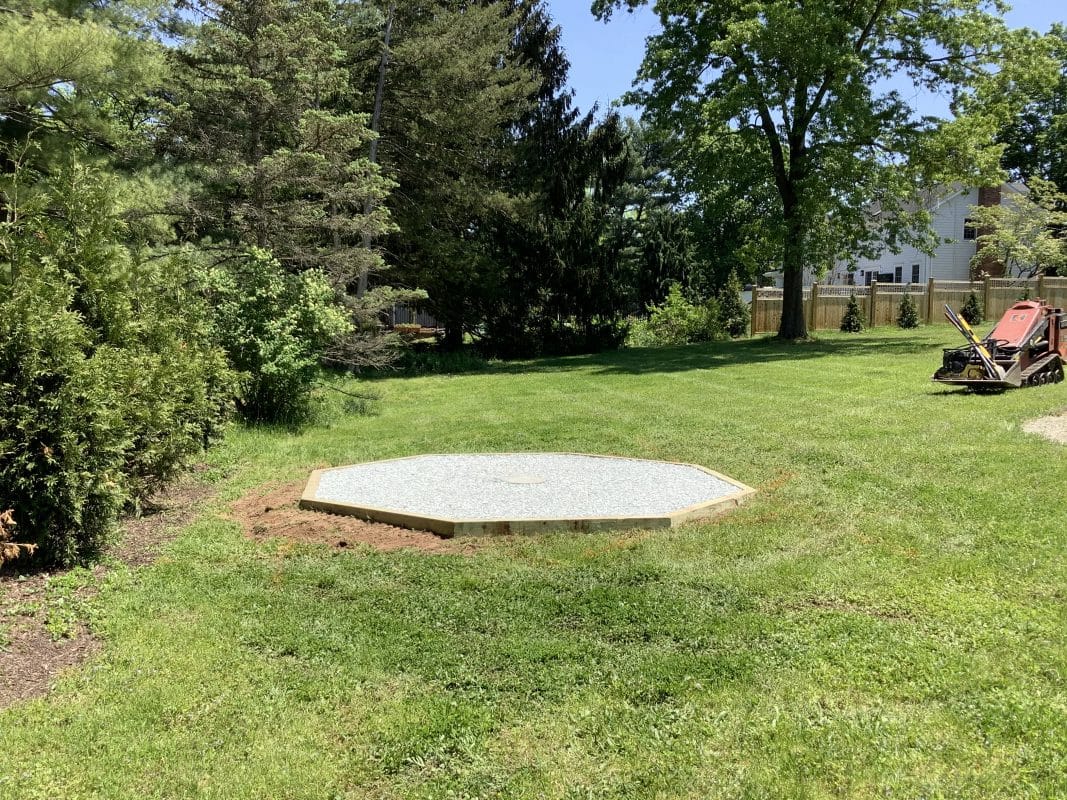
The most common foundation for above-ground and light in-ground fire pits.
What’s Included:
- Pea gravel or crushed stone: $30-$50 per ton
- Landscape fabric: $20-$40
- Sand layer: $25-$50
- Labor (if professional): $50-$150
Installation:
- Excavate 6-8 inches deep
- Extend 12-18 inches beyond fire pit perimeter
- Layer landscape fabric, 2-3 inches sand, 4-6 inches gravel
- Compact thoroughly
Installation Time: 2-4 hours (DIY-friendly)
Pros: Affordable, excellent drainage, easy DIY installation, adjustable
Cons: Not for heavy structures (1,000+ lbs), gravel shifts over time
Lifespan: 10-15 years
Maintenance: Add gravel and re-level every 3-5 years ($20-$50)
Concrete Pad (Cost: $500 – $2,000)
The permanent solution for heavy fire pits and gas installations.
Cost Breakdown (6′ x 6′ pad):
- Concrete (2-3 cubic yards): $200-$400
- Rebar/wire mesh: $50-$100
- Gravel sub-base: $50-$100
- Forms: $30-$50
- Professional labor: $200-$1,000
- Total: $530-$1,650
Thickness:
- 4-inch pad: $8-$12 per sq ft (standard fire pits)
- 6-inch reinforced: $12-$18 per sq ft (heavy stone structures)
Installation Time: 1-2 days plus 7-14 days curing
When Concrete is Required:
- Gas fire pits (code requirement)
- Heavy stone structures (1,000+ pounds)
- Poor soil conditions
- Cold climates with frost heave
Pros: Maximum stability, lasts 25-30+ years, supports any weight
Cons: Most expensive, permanent, requires professional installation
Critical: Must include proper drainage slope (1-2% grade away from pit)
Paver Base ($400 – $1,200)
Middle-ground option combining durability with aesthetics.
What’s Included:
- Pavers: $3-$15 per sq ft installed
- Base preparation: $100-$300
- Sand and edge restraint: $70-$160
- Professional installation: $200-$600
- Coverage: Typically 40-60 square feet around fire pit
Installation Layers:
- Excavate 8-10 inches
- Compacted gravel base (4-6 inches)
- Bedding sand (1-2 inches)
- Pavers with edge restraint
Pros: Attractive, integrates with patio, individual pavers replaceable
Cons: More expensive than gravel, joints need re-sanding every 2-3 years
Best For: Fire pit patio cost projects where appearance matters
DIY vs. Professional Installation
Building your own fire pit saves money but requires time, skills, and physical effort. Simple wood-burning designs are manageable weekend projects for most homeowners with basic construction experience.
Gas and propane installations are different — these need licensed professionals. Gas line work involves permits, inspections, and technical expertise that shouldn’t be attempted as DIY. Always check local regulations and permit requirements before starting any fire pit project.
What You’ll Spend on DIY Materials:
| Material/Tool | Price Range |
|---|---|
| Concrete & mortar (bags) | $35 – $60 |
| Fire pit ring insert | $50 – $250 |
| Fire bricks (complete set) | $45 – $60 |
| Gravel & sand base | $55 – $90 |
| Basic hand tools (trowel, hoe, bucket) | $40 – $60 |
| Shovel, rake, level | $50 – $75 |
| Power tool rental (saw) | $20 – $30/day |
| Capstones & finishing | $50 – $100 |
| Total DIY Cost | $150 – $700 |
Building it yourself takes 15-20 hours spread over 2-3 weekends. You’ll handle excavation, foundation prep, material assembly, and finishing work. The physical labor is substantial — lifting bags of concrete, moving stones, digging, and compacting gravel.
Professional installation costs $500-$4,000+ depending on complexity, but includes site assessment, proper foundation work, expert construction, cleanup, and typically a warranty. Most homeowners working with a backyard contractor pay $800-$1,500 for standard installations. Professionals complete the job in 1-3 days with guaranteed results and code compliance.
Fire Pit Kits — The Middle Ground
Kits offer another option, priced at $400-$1,300. These packages include pre-sized materials, fire rings, and step-by-step instructions. Installation takes 6-10 hours, making them easier than building from scratch. The trade-off? Lower-quality materials that may not last as long as custom builds. Kits work well for homeowners wanting something between full DIY and professional custom work.
DIY costs $150-$700 and suits simple projects. Professional installation runs $500-$4,000+ but guarantees quality. At Site Prep, we specialize in complete installations including proper foundation work — the critical step many DIY projects skip. Companies like Site Prep understand that the cost to build a fire pit right the first time prevents expensive repairs later.
Fire Pit Installation Cost by Location
Where you live significantly affects what you’ll pay. Labor rates, material availability, permits, and local regulations vary dramatically across the country.
Fire pit costs aren’t the same everywhere. A $1,200 installation in Texas might cost $1,800 in California or New York.
Regional Cost Multipliers:
| Region | Cost Adjustment | Average Installation |
|---|---|---|
| Northeast (NY, MA, CT, NJ) | +20-30% | $1,000 – $2,600 |
| West Coast (CA, WA, OR) | +15-25% | $950 – $2,400 |
| Midwest (IL, OH, MI, IN) | Baseline | $800 – $2,000 |
| South (TX, FL, GA, NC) | -10-15% | $700 – $1,800 |
| Mountain States (CO, UT) | +5-15% | $850 – $2,200 |
Labor costs drive most regional variation. A mason in New York City charges $80-$120/hour. That same work costs $50-$70/hour in smaller Midwest or Southern cities. Material transport also factors in — shipping stone 500 miles adds 15-20% to costs.