
How to Clean Artificial Grass in Balcony

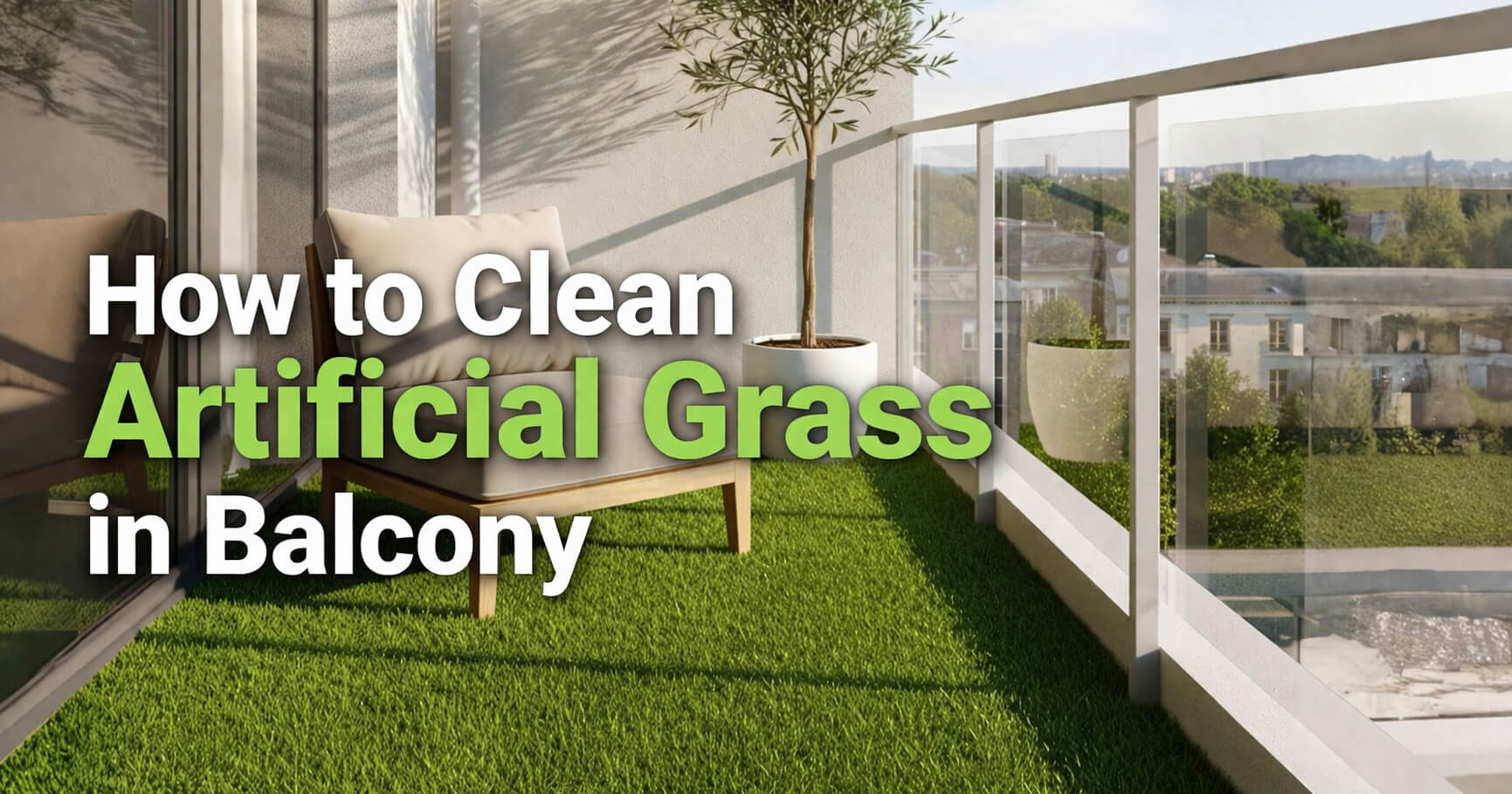
Got an artificial turf installation on your balcony, but no idea how to keep it clean? Clean the grass every week with plenty of water, brush the fibers upwards after that, take care of spills as quickly as possible, and if you own pets – use an enzyme cleaner. That will do the trick in about 90% of cases. The remaining part – right below.
Table of Contents
Why Your Balcony Turf Installation Should Be Regularly Maintained
Your balcony artificial grass installation will differ from a lawn considerably. Ventilation is worse, the draining system is more limited, and all the dust and dirt concentrates in a very small area.
It’s also important to understand that unlike a natural lawn, an artificial turf installation is not self-cleaning. Of course, it requires less maintenance – still, it needs some care to avoid matting, fading, and bad smell in the end.
The only way to ensure your grass remains like new is regular maintenance, which will extend its lifespan significantly.
What You’ll Need to Clean Artificial Grass on a Balcony
No fancy stuff. Likely, you will have everything mentioned below:
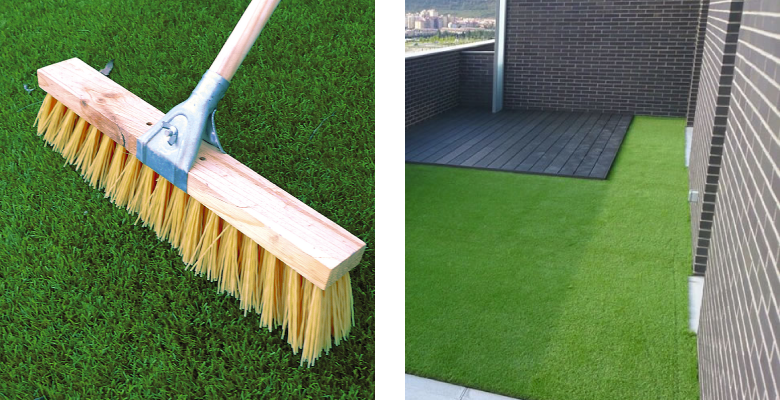
- Brush or broom (with stiff synthetic bristles – never use metal brushes)
- Hosepipe connection or a bucket if hosepipe is not available
- Spray bottle
- Paper towels or rags
- Mild dishwashing liquid (Dawn detergent is highly recommended – details further down)
- White vinegar
- Turf enzyme cleaning agent for removing pet smells
- Miniature rake or leaf blower for debris removal
That’s your full toolkit. Simple, affordable, effective.
How to Clean Artificial Grass on a Balcony – Step by Step
This is where you start for a proper cleaning. Follow these steps once weekly and that should be enough.
- Debris removal. Remove all leaves, twigs, and larger items using your hands or a rake. You cannot afford to miss this step – debris leads to matting and drainage problems.
- Rinsing. Use a garden hose or pour water from a bucket to rinse the whole surface. This removes dust, small particles, and pet urine deposits.
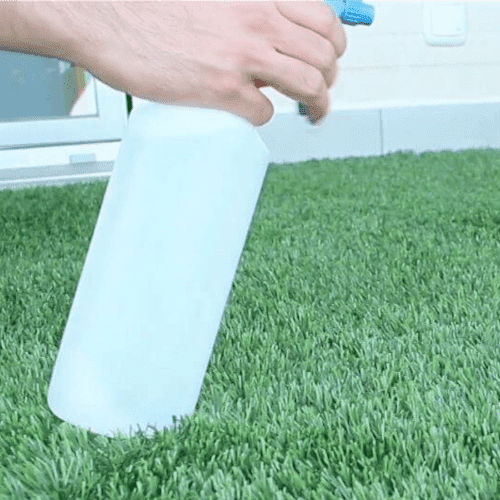
- Apply a cleaner. Mix mild soap into water and apply the solution thoroughly. An alternative – mix equal parts of white vinegar and water in a spray bottle.
- Allow time. Wait for five minutes. Don’t rush this part.
- Rinse again. Rinse thoroughly. Do not allow any residue to remain – it attracts dirt.
- Cross-brushing. Using your stiff brush, scrub against the grain to get the blades upright. This makes them appear thick and full rather than flat.
- Drying. Don’t cover the surface or place objects back on it right away. Let it air dry.
For a more detailed walkthrough, check out our guide on How to Clean Artificial Grass Step-by-Step.
How to Clean Artificial Turf on a Balcony Every Week
The weekly routine does not have to be time-consuming. 15 minutes at most. Here’s how it looks:
Daily (2 minutes):
- Remove all visible debris
- Shake out any rug or mat placed on the turf
Once a week:
- Thoroughly rinse with water
- Inspect for any stains that may have been overlooked
- Light brushing to ensure all fibers stand upright
Every 3-4 weeks:
- Comprehensive cleaning with a soapy solution
- Intensive brushing in multiple directions
- Inspect all drainage areas and ensure there is no clogging
How to Remove Common Stains from Balcony Artificial Grass
Stains happen. Wine, coffee, food, mud – none of these last forever if you take prompt action.
How to Clean Fresh Spills on Balcony Turf
Time is of the essence. The faster you get to it, the easier it comes out.
- Blot the spill with paper towels – avoid scrubbing
- Flush the area with plain water
- Apply a gentle soapy solution
- Rinse again and let it air dry
How to Remove Dried or Old Stains from Artificial Grass
Dried stains take a little extra effort, but it’s not impossible.
- Mix dish soap and warm water in a bucket
- Apply with a sponge or cloth and rub in gently
- For stubborn stains, switch to a 50/50 vinegar and water solution
- Rinse thoroughly and repeat if needed
Yes, you can use Dawn dish soap on artificial turf – it’s safe, mild, and effective on most organic stains.
How to Remove Sticky Residue from Balcony Turf
Gum, tree sap, or something sticky your kid dragged in – these need a different approach.
- Apply ice directly onto the sticky area and let it freeze
- Once frozen, scrape off with a plastic scraper or putty knife
- Follow up with a soapy water rinse
Do not use metal scrapers – they will damage the fibers.
How to Remove Odor from Artificial Turf Balcony
Odor is the most common problem with balcony turf, particularly if you have pets. And yes – you can get urine smell out of artificial turf. But you have to use the right product.
Soap and water clean the surface. Urine odor, however, lives deeper – in the infill and backing. Air fresheners won’t solve this. The only real solution is an enzyme cleaner that breaks down ammonia compounds at the molecular level.
Follow this process:
- Rinse the affected area thoroughly with water
- Apply an enzyme turf cleaner (or a vinegar-based solution as a DIY alternative)
- Leave it to soak for 10-15 minutes
- Rinse again completely
- Allow to fully air dry
If pets use the balcony regularly, this should be part of your weekly routine – not just a reaction to smell. Prevention always works better than cure.
If you’re having trouble with dogs using your artificial turf, read our article on how to clean artificial turf for dogs.
How Often Should You Clean Artificial Grass on a Balcony?
| Task | Frequency |
|---|---|
| Remove debris | Daily or as needed |
| Rinse with water | Once a week |
| Brush fibers upright | Once a week |
| Full soap-and-water clean | Every 3-4 weeks |
| Enzyme treatment (pets) | Weekly |
| Deep professional clean | Once a year (heavy use) |
If there is significant foot traffic, direct sunlight, or frequent pet use – clean more often. If the turf is mostly decorative and rarely used, you can extend the schedule.
What NOT to Do When Cleaning Artificial Turf
A few things that seem fine but will actually damage your turf over time:
- Don’t use a pressure washer – it rips up fibers, damages seams, and displaces infill. A regular garden hose is all you need.
- Don’t use metal-bristle brushes – they shred the fibers. Synthetic bristles only.
- Don’t use harsh chemicals – bleach, acetone, and strong solvents degrade the turf material and void most warranties.
- Don’t let debris sit – it traps moisture, promotes bacterial growth, and causes staining over time.
- Don’t ignore drainage – if water is pooling, something is blocking the drain. Check it regularly.
- Don’t drag heavy furniture – it damages fibers from friction. Always lift.
Tips to Keep Balcony Turf Grass Cleaner Longer
Small habits that make a noticeable difference:
- Place a doormat at the balcony entrance to catch dirt before it reaches the turf
- Rotate outdoor furniture occasionally to avoid permanent flat spots
- Trim nearby plants – falling leaves and sap are a constant source of debris
- Deal with spills immediately – don’t leave them for later
- If you have pets, apply a deodorizer proactively – not just when smell appears
- In fall, check more frequently – leaf buildup happens fast and traps moisture
None of these take much time. But together, they can seriously reduce how often you need a deep clean.
FAQ About Cleaning Artificial Grass in Balcony
No. A pressure washer is too powerful for artificial turf – the spray damages fibers, destroys seams, and displaces infill. Stick to a regular garden hose.
Rinse regularly and treat with an enzyme turf cleaner – especially if pets use the space. Enzyme cleaners break down the odor-causing compounds at the source. For mild smells, a diluted vinegar and water mixture works well.
Not at all. Weekly rinsing and brushing are the two key activities. Add an enzyme treatment if you have pets. It’s genuinely one of the lowest-maintenance flooring options for outdoor spaces.
For routine cleaning – mild dish soap mixed with water. For odors, especially pet-related – an enzyme turf cleaner. For light stains – a 50/50 white vinegar and water solution.