Types of Artificial Grass

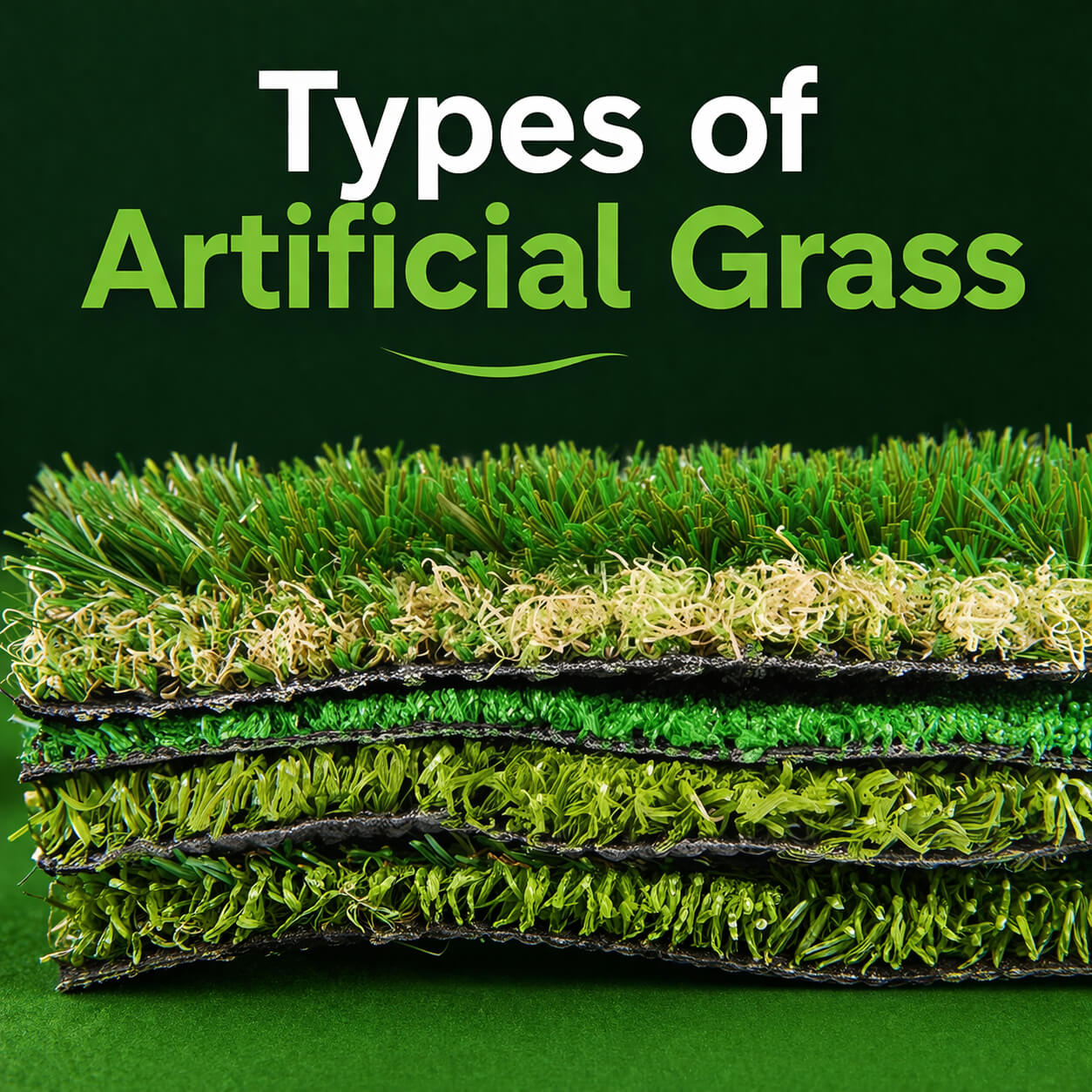
All artificial grass is not made the same, and there is certainly more than one type of artificial grass on the market. And if you find yourself wondering why two rolls look different, that may have to do with the material used, the blade formation, pile height, and the intended purpose of each. Artificial grass can be defined by its material composition (PE, PP, and nylon), blade formation, pile height, and application.
Table of Contents
How Artificial Grass Is Classified
Entering any showroom with samples of artificial grass, you may feel a little lost due to the diversity of samples. But here’s the thing – every type of artificial grass differs in four key ways:
- Fiber material – what the blades are made from
- Blade shape – how the individual fibers are structured
- Pile height – how long the blades are
- Application – what the turf was specifically designed for
Get those four things right and you’ve got your answer. Everything else is details.
Compared to modern turf samples, the only sample of artificial turf that existed back in its day was AstroTurf. Its similarity to the contemporary product is purely theoretical, as modern turf is soft and natural-looking while AstroTurf was hard and flat.
When thinking of installing artificial grass in your yard, look up artificial turf installation near me first.
Types of Artificial Grass by Fiber Material
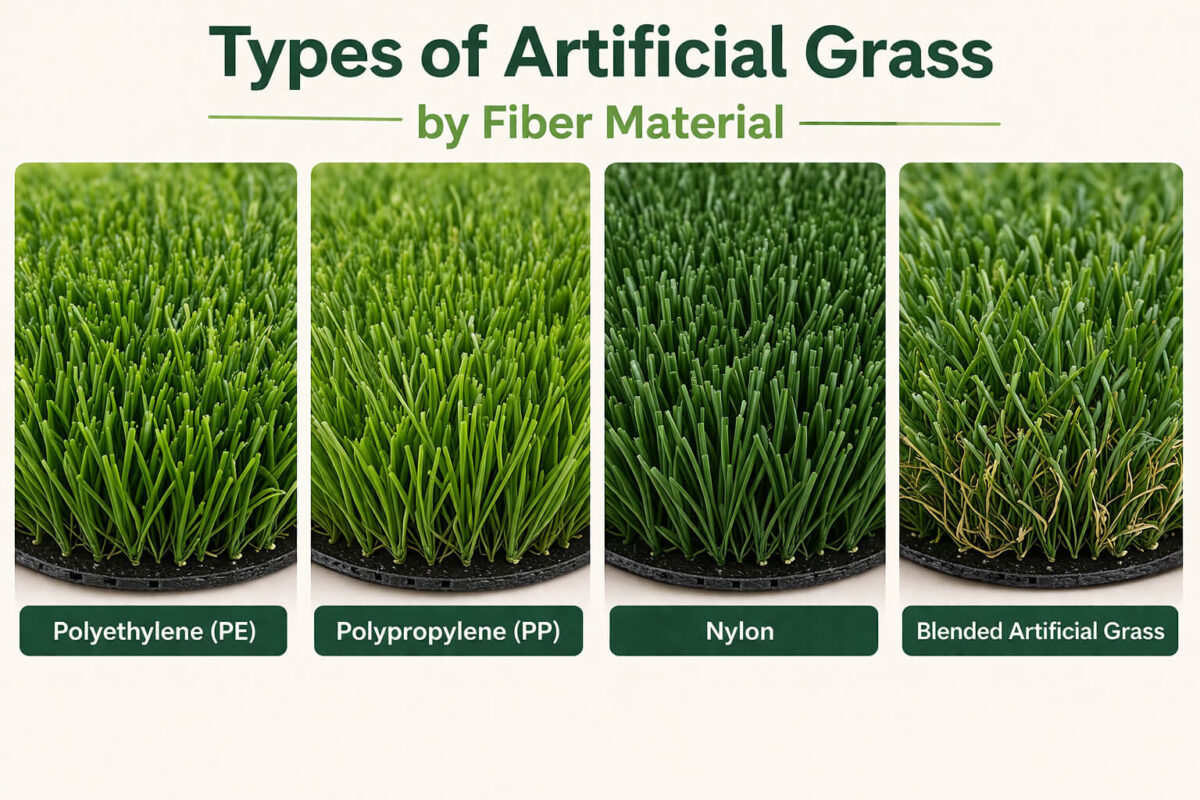
Here is where things begin. Material determines the look and feel of your turf, as well as its durability and cost.
Polyethylene (PE)
PE is the most popular material on the market – and for good reason. It’s soft, it looks realistic, and it holds up well under moderate to heavy foot traffic. Most residential landscaping turf is polyethylene-based.
PE turf characteristics:
- Soft touch, the closest to real grass feel
- Resistant to UV exposure
- Reasonably good at withstanding heat
- Suitable for lawns, backyard and balcony turfs, pet areas
If in doubt about material choice, PE is always the best choice for residential installation.
Polypropylene (PP)
PP is the budget option. It’s lighter, easier to install, and generally the least expensive synthetic grass type you’ll find. The tradeoff? It’s less durable and can struggle in high-heat, high-sun environments.
Suitable for:
- Limited foot traffic decorative turfs
- Indoor installations
- Putting green turfs
- Temporary installations
Do not expect your PP turf to withstand much foot traffic in backyard conditions. It will not.
Nylon
Nylon is the toughest material available. It’s strong, highly durable, and bounces back after compression better than any other fiber. The downside – it’s the most expensive, and it tends to feel stiffer underfoot.
Best for:
- Sports fields
- High-traffic commercial areas
- Putting greens that need precise ball roll
- Areas that see heavy equipment or furniture
It’s not the most comfortable option for bare feet, but if you need durability above everything else, nylon is your answer.
Blended Artificial Grass
Some manufacturers combine PE and nylon – or PE and PP – to get the best of both. You get more softness than pure nylon with more resilience than pure PE. Blended turf tends to sit in the mid-to-upper price range and works well for areas that need both comfort and durability.
Comparison Table – Different Types of Fake Grass
| Material | Feel | Durability | Best For | Cost |
|---|---|---|---|---|
| Polyethylene (PE) | Soft, realistic | Moderate – high | Lawns, pets, balconies | Mid-range |
| Polypropylene (PP) | Light, firm | Low – moderate | Decorative, indoor, putting greens | Budget |
| Nylon | Stiff | Very high | Sports, commercial, putting greens | Premium |
| Blended | Balanced | High | Residential + moderate traffic | Mid – premium |
Types of Turf Grass by Blade Shape
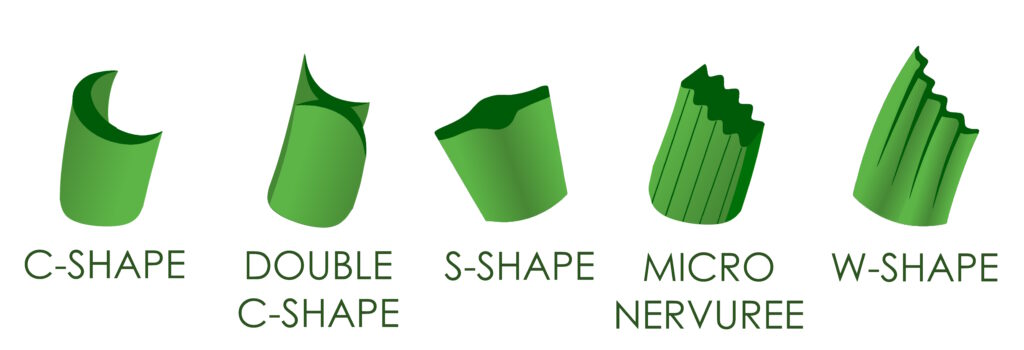
Blade type is one of those characteristics that customers rarely pay attention to until the blade of grass becomes flat and matted after several months of use. The blade type determines the blade’s ability to remain in an upright position under pressure and the final look of the blade itself.
Monofilament Blades
Made from single-stranded blades with a flat and even surface. Monofilament blades provide the most lifelike look and are usually recommended for homeowners who opt for landscaping turf grass.
Fibrillated Blades
Made up of a netted material that will intertwine when installed. Fibrillated blades do not resemble real grass much, but they are very resilient. Fibrillated blades are mostly found on sports grounds.
Slit-Film Blades
Combine the properties of monofilament and fibrillated blades. They offer a middle ground for the buyer – good durability and acceptable blade appearance.
C-Shaped / W-Shaped / S-Shaped Blades
The blade’s shape is more important than one would think. Curved blades (S, C, W, V shapes) will have more structural memory – which means they’ll bounce back once stepped on. Flat blades won’t. When you’re dealing with foot traffic in your garden, always make sure to buy a blade with a defined shape.
Types of Artificial Grass by Pile Height
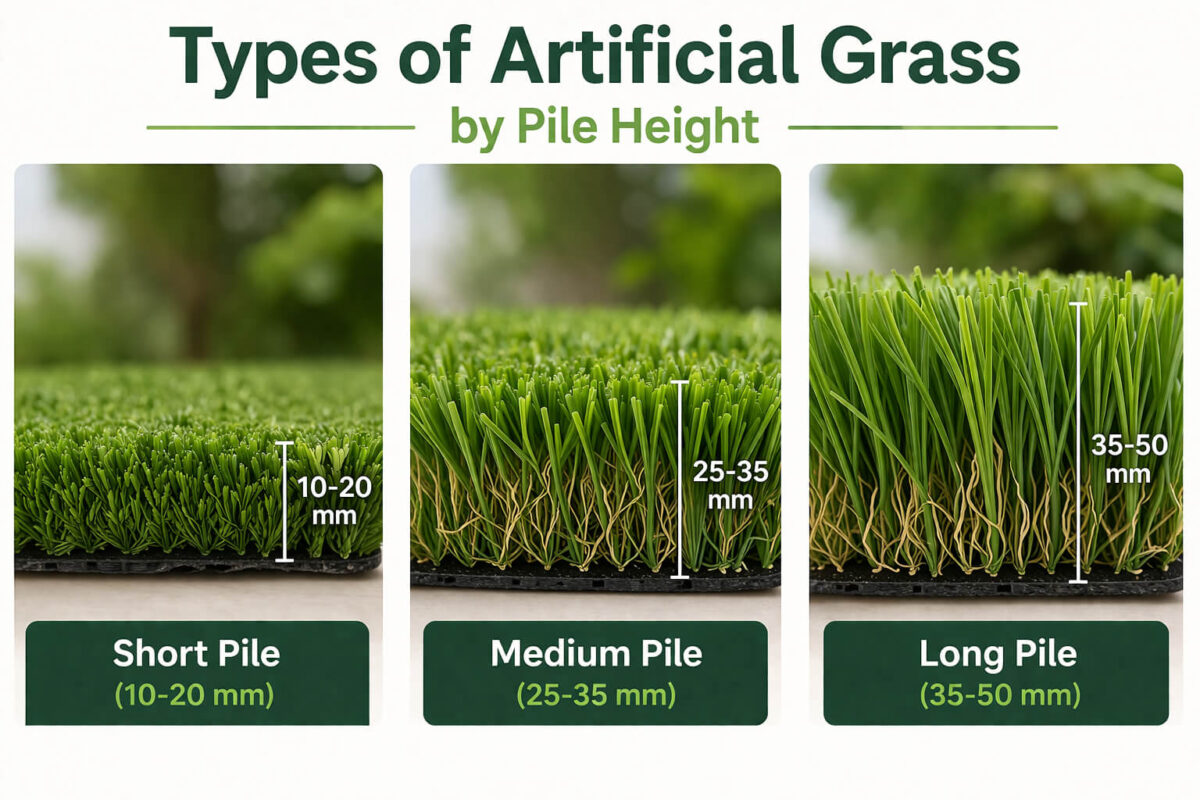
The pile height – blade length – impacts not only the appearance but the performance of the grass. The ideal height varies from case to case.
Short Pile (10-20 mm)
- Easy to clean and care for
- Highly resistant to wear
- Ideal for putting greens, playgrounds, balconies
- Doesn’t look luxurious but is highly practical
Medium Pile (25-35 mm)
- The perfect fit for most home environments
- Looks realistic and is durable enough
- Ideal for yards, pets, and medium traffic zones
- The standard pile height for backyard projects
Explore our professional artificial grass backyard services to discover which pile heights offer the best performance and aesthetics for your specific home environment.
Long Pile (35-50 mm)
- The most luxurious and realistic looking
- Suitable for low-traffic decorative zones
- Highlights footprints as time passes
- Can be difficult to maintain if debris builds up
Types of Artificial Grass by Application
This is where different artificial grass types show their differences. The same PE monofilament blade will look totally different when used in pet turf vs. landscaping grass – thanks to the unique backing and infill used.
Artificial Grass for Landscaping
A popular use for artificial grass. It should be soft, visually appealing, have an average to long pile height, and mimic nature with its color range, especially the presence of thatch. PE monofilament is used here.
Artificial Grass for Sports Surfaces
Durability and traction are key. Use nylon or superior blends, short pile height, and infill for shock absorption and improved grip (crumb rubber or silica sand).
Artificial Grass for Pets
Drainage and odor resistance are essential. Choose antimicrobial infill, latex-free backing, and a short pile height for easy cleaning. To ensure long-term freshness, discover our professional pet turf installation services and maintenance solutions.
Artificial Grass for Playgrounds Where Kids Play
Safety is the key concern, which is why the grass is always fitted with a foam mat to ensure shock absorption. Opt for eco-friendly and easy-to-maintain grass with good drainage and UV protection.
Artificial Grass for Balconies and Roofs
Weight becomes an issue in such situations – there’s no need to burden your balcony with extra load. Proper drainage is required due to a lack of run-off options. Short pile is sufficient, no infill required. Cleaning is easier without infill.
Artificial Grass for Golf Courses (Putting Greens)
Short pile (10-15 mm), even and smooth, and the ball needs to roll properly. Nylon or polypropylene are preferable. One of the rare cases when polypropylene is better than polyethylene.
Artificial Grass for Indoor Areas
Weight, aesthetics, and ease of installation are the priorities. No infill is required indoors. Polypropylene and polyethylene are both used.
Pool Surrounding Artificial Grass
Must be able to withstand frequent water exposure without breaking down. Needs a highly porous base, UV-stable yarns, and antimicrobial filler material to maintain hygiene in wet conditions. Often installed in strip form between paving stones.
Once you’ve chosen your turf type, keeping it clean is straightforward – our How to Clean Artificial Grass Step-by-Step guide covers everything.
Types of Artificial Grass Backing
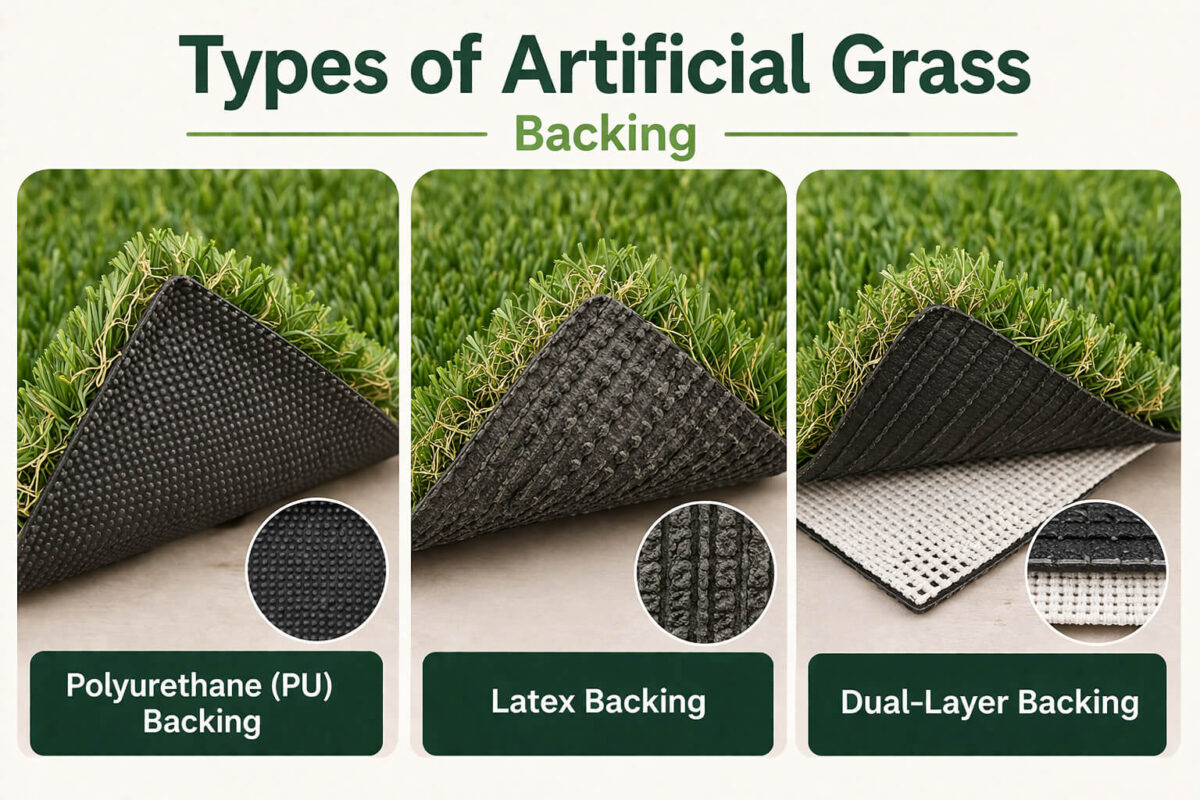
The backing isn’t always a focus, but it influences drainage, wear and tear, odor absorption, and the longevity of your artificial grass installation.
Polyurethane (PU) Backing
The superior choice. This type of backing is extremely porous, does not absorb odors, and tightly locks in the fibers. The best option for artificial grass used by pets and top-tier home installations.
Latex Backing
A more accessible and budget-friendly choice, but with one major flaw – latex backing can trap pet urine and odors. Ideal for ornamental or low-traffic applications. Not recommended for dog owners.
Dual-Layer Backing
Backings consisting of two layers, with woven polypropylene as the primary material and PU or latex as the secondary sealer. This gives the most stability and is the most common type found in all good quality synthetic grass products.
How to Choose the Right Type of Artificial Grass for Your Space
Once you’ve worked through your requirements, the different types of artificial grass start to sort themselves out pretty quickly. Suddenly, a long list of possible choices gets narrowed down to just a couple of options that make sense for the application. This chart lays out the most common use cases along with their corresponding requirements.
| Your situation | Best material | Pile height | Backing | Infill |
|---|---|---|---|---|
| Residential lawn | PE monofilament | 25-35 mm | Dual-layer | Silica sand |
| Pets (dogs) | PE or blended | 20-30 mm | PU (non-latex) | Antimicrobial |
| Kids’ play area | PE or blended | 25-40 mm | Dual-layer | Crumb rubber / foam pad |
| Sports field | Nylon or blended | 15-30 mm | Dual-layer | Crumb rubber |
| Balcony / rooftop | PE or infill-free | 15-25 mm | PU | None or light silica |
| Putting green | PP or nylon | 10-15 mm | PU | Silica sand |
| Pool area | PE | 20-30 mm | PU | Antimicrobial |
| Indoor / decorative | PP or PE | 10-25 mm | Latex | None |
This can be seen as an initial step – other factors such as climate, budget, and design layout should also be considered.
Usually, there is no ideal solution when it comes to choosing between materials. However, people tend to make mistakes when they think about the importance of one specification but forget about the others. Material is one thing, but using premium quality PE fibers with a latex backing and the wrong pile height might result in poor performance. It can be likened to a combination lock where you need to match all four factors together with your requirements – otherwise, you’ll feel it within the first year of use.
FAQ About Installing Artificial Turf on Dirt
Polyethylene monofilament grass that comes with a thatch layer and multicolor blade coloring. The thatch creates a realistic resemblance to natural dead grass beneath the blades, giving it an authentic appearance.
Nylon. It is the toughest artificial grass and can withstand wear, tear, high temperatures, and compression unlike any other material. Its only disadvantage is cost.
For residential use – polyethylene. For sports – nylon. For budget commercial applications – polypropylene.
Go for PE or blended fibers, PU backing that is not made of latex, antimicrobial infill, and short pile height. Drainage should be at least 30+ inches per hour. Latex backing must be avoided in all cases with dogs.
Expensive grass will typically perform better due to higher quality fibers and backing materials. However, if it’s used on a balcony with little activity, there’s no need to go for grass engineered to resist wear like nylon.
Short to medium – from 15 mm to 25 mm is fine. Short pile is more durable, easy to keep clean, drains well, and withstands wear in areas where debris can easily collect.