
What Is a Drip Septic System and How Does It Work?

Managing wastewater on properties with challenging soil conditions has become a common concern for many homeowners, especially in areas where traditional drain fields cannot be used safely. As building regulations tighten and land availability decreases, alternative dispersal methods are gaining attention. One option that appears frequently in modern septic design conversations is the drip septic system, a solution known for its adaptability and precise effluent control.
People researching advanced septic options often want to understand how this system fits into real-world installations, what it costs, and whether it provides long-term value. Before deciding if it is the right choice, it helps to review how it works, where it performs best, and what maintenance responsibilities come with it.
Table of Contents
What Is a Drip Septic System
A drip system uses thin tubing with evenly spaced emitters that deliver treated wastewater at a controlled rate. This type of design is used when traditional drain fields are not suitable. The layout can be installed around obstacles, shaped to a narrow lot, or adjusted to uneven terrain. Because a drip irrigation septic system relies on pressure instead of gravity, wastewater moves through the tubing in small pulses rather than constant flow. Some advanced installations use an aerobic drip septic system, which introduces oxygen to improve treatment efficiency. When crafted correctly, this type of alternative dispersal field performs well in challenging environments and complies with strict local regulations. Homeowners often request detailed information about soil compatibility, dispersal patterns, and long-term expectations before choosing the system.
How Does a Drip Septic System Work
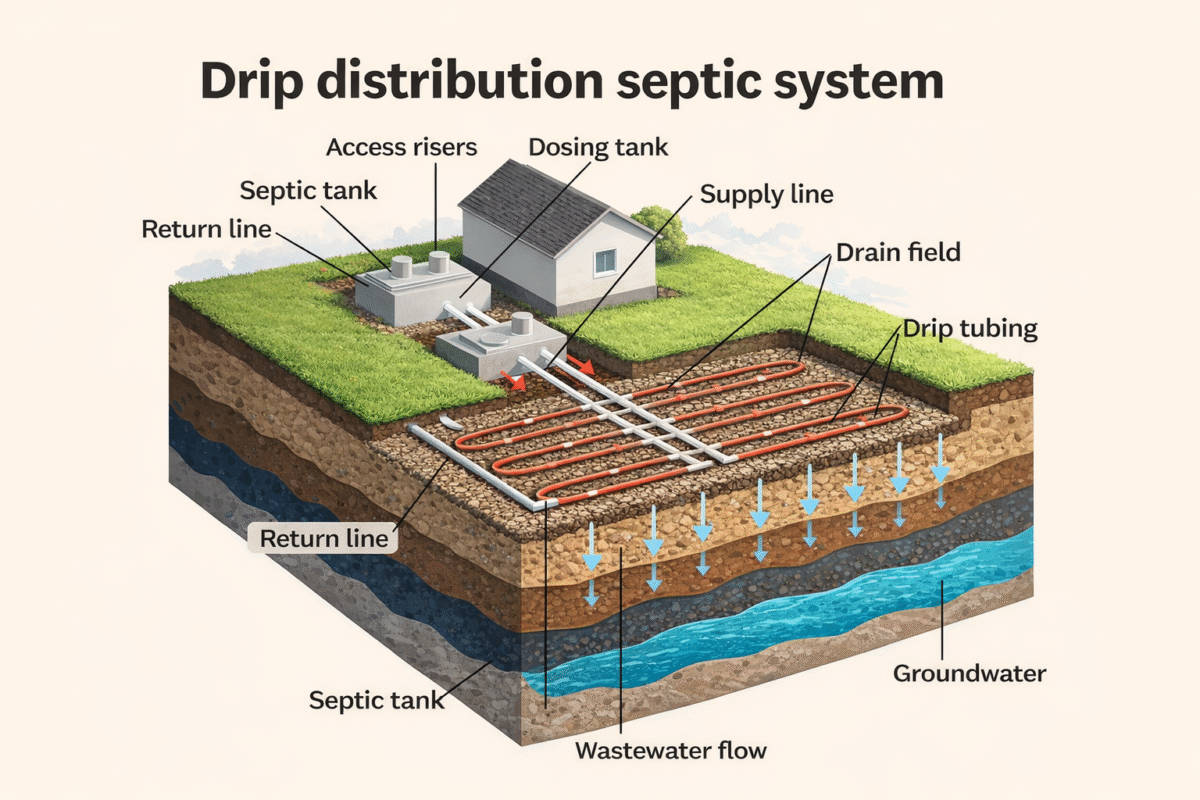
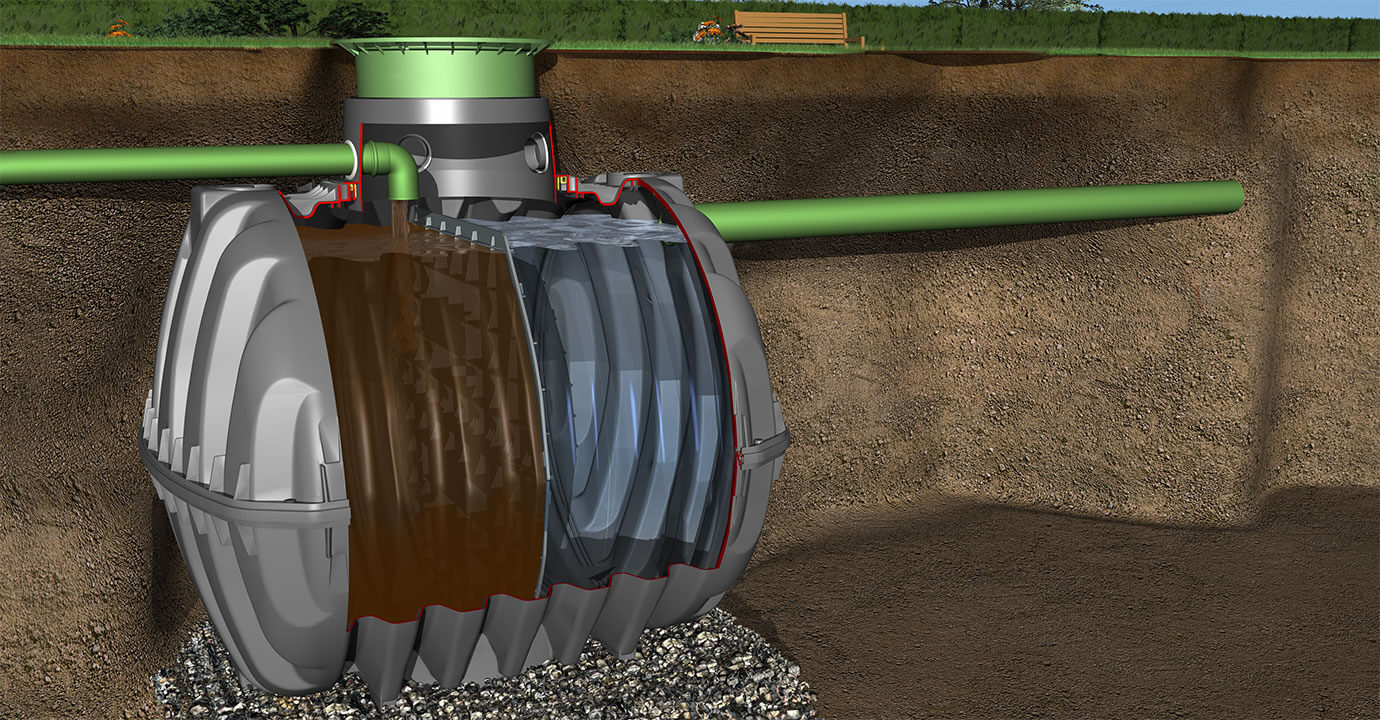
A complete drip septic system work process begins inside the septic tank, where solids settle and clarified effluent is separated. The liquid then moves to a second treatment chamber or pump tank equipped with filters. These filters are essential for protecting the drip emitter septic system, since the emitters have extremely small openings. After filtration, a pump pressurizes the wastewater and sends it to the drip field. Timers regulate release cycles, ensuring the entire zone receives equal distribution.
The shallow dispersal depth used by drip line septic systems allows the field to function in rocky, compacted, or irregular soil. Property owners often call a septic system contractor to evaluate soil layers, determine dispersal rates, and design the field layout. Installation requires precise trenching and leveling, which means an excavation service usually participates in the project along with professional site preparation specialists.
Drip Septic System Pros and Cons
Pros
- Works where traditional trenches fail because of soil or slope;
- Shallow dispersal minimizes disruption to landscaping;
- Timed delivery prevents oversaturation and increases field lifespan;
- Suitable for many types of septic systems as an upgrade;
- Highly adaptable for rural lots with difficult terrain.
Cons
- Higher upfront cost due to pumps, filters, and control panels;
- Regular maintenance is needed to prevent clogging;
- More components can mean more long-term problems;
- Requires electrical power and monitoring;
- Installation is more complex than standard systems.
When homeowners ask “Are drip septic systems worth it?”, the answer often depends on whether their soil can support a traditional drain field. In many restrictive locations, drip technology becomes not only beneficial but necessary.
How Much Does a Drip Septic System Cost
Pricing varies widely because each system must be engineered to match the property’s soil conditions, slope, and wastewater volume. Many homeowners wondering “Is a drip septic system expensive?” discover that the cost is generally higher than a basic system. A typical installation includes pumps, electrical controls, filtration units, and hundreds of feet of tubing. The need for careful engineering also increases total cost.
Average expenses can rise further when mound terrain, rocky soil, or limited acreage requires additional equipment. Total prices may also include trenching, electrical work, and adjustments tied to sewer service requirements.For maintenance, the question “How do you maintain a drip septic system?” usually involves regular filter cleaning, flushing of drip lines, annual inspections, and occasional adjustments to pump cycles. With proper care, drip systems provide reliable performance for many years and remain one of the most effective advanced dispersal options on the market.