What is Artificial Turf Made Of

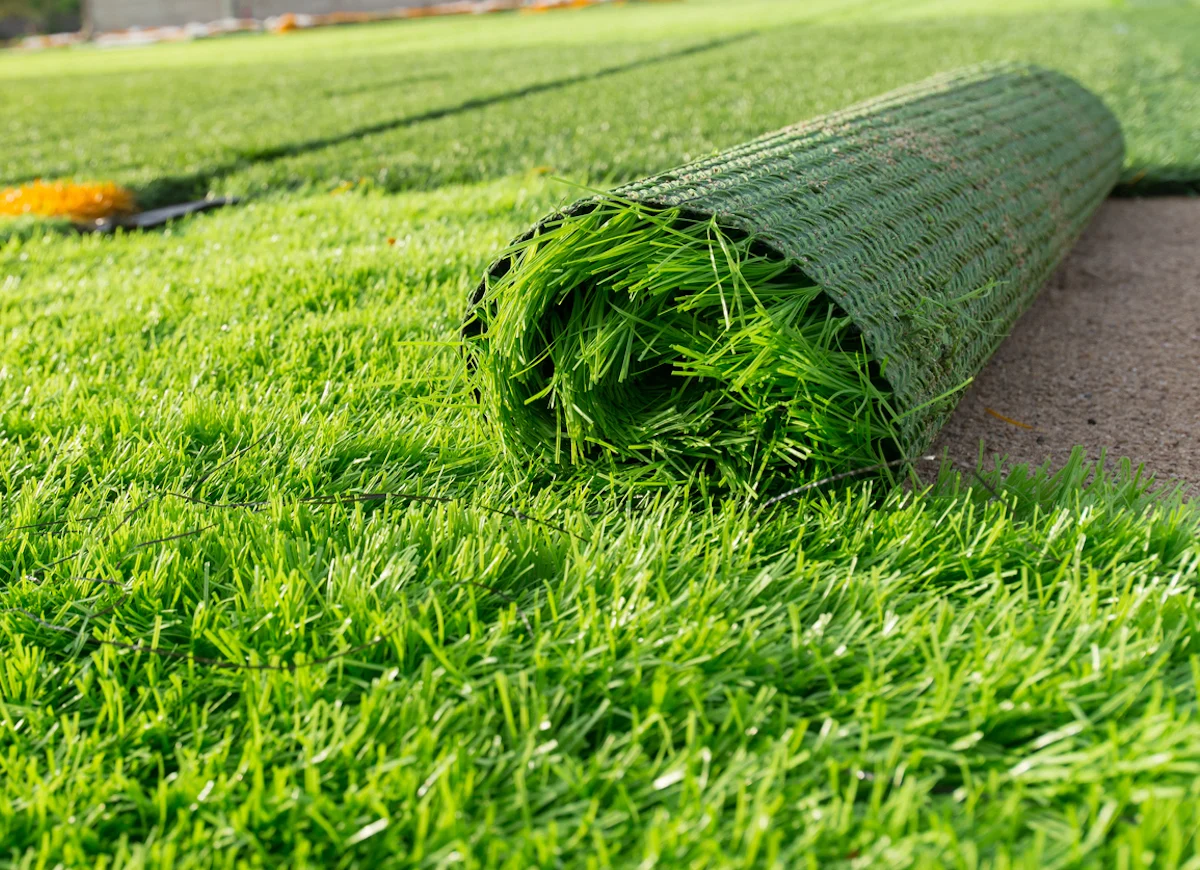
Synthetic turf is made from plastic-based fibers – usually polyethylene, polypropylene, or nylon – stitched into a durable backing and topped with infill like sand or rubber granules. Modern synthetic grasses nowadays are completely safe for children and animals.
Table of Contents
What Is Artificial Grass?
But what is artificial turf exactly? Artificial turf is a ground covering consisting of synthetic fibers that mimic natural grass. Artificial turf can be applied on almost any surface; it is often installed for home lawns or turf fields at professional sporting venues. Also called synthetic turf, fake grass, or AstroTurf (a brand name that became a generic term).
If you’re wondering what is artificial turf made of at its core – it’s three things:
- Fibers – referred to as “blades of grass,” which are synthetic polymer-based
- Backing – the layer to which the fibers are sewn
- Infill – granular material laid in-between the “blades”
Want to compare it against real grass first? Synthetic Turf vs. Natural Grass: A Pros and Cons List.
A Brief History of Artificial Turf
AstroTurf was invented for use in the Houston Astrodome in 1966. The purpose was not realism but durability. It performed well against the demands of indoor usage, and the idea caught on quickly. Synthetic turf was seen in the 1970s at the Montreal Olympics and on football fields across the nation.
It wasn’t until the 1990s and 2000s that major advances were made in artificial turf. Polyethylene took the place of nylon in most landscaping situations, fibers became more realistic, and layers improved water drainage substantially. Today, manufacturing artificial grass produces products genuinely difficult to distinguish from real grass – and far more sophisticated than anything the original AstroTurf team imagined.
How Is Artificial Turf Made? Step-by-Step
The artificial turf manufacturing process is not very far away from carpet manufacturing. The following is the procedure of manufacturing from starting material to a ready roll of grass-like carpet:
Stage 1 – Raw Material Selection and Melting
All the grass comes from plastics in the form of pellets made of polyethylene, polypropylene or nylon. This material is first melted before adding colorants and UV inhibitors to the mixture.
Stage 2 – Extruding and Shaping the Fibers
The molten plastic is extruded via the extruder in the form of strands, which are stretched to make them stronger. The shape of the blade is far more important than you would think – this is why turf made out of C-shaped, S-shaped, or diamond cross-section fibers gives an incredibly realistic look compared to the old flat blades of early artificial grass.
Stage 3 – Tufting Into the Backing
The tufting process involves threading yarn through a woven polypropylene base using a large-scale sewing machine known as a tufting machine. This creates loops that are then cut to form blades. The important specifications determined at this stage are:
- Height – height of grass
- Gauge – space between rows (narrow = dense)
- Face weight – weight of yarn per square yard
Stage 4 – Coating, Drainage Holes, and Quality Testing
Polyurethane or latex glue is used on the backing in order to fix the fibers permanently. Holes for draining are punctured at intervals of about 10 cm. After that, there will be quality control in terms of the tensile strength of the fibers, their resistance to ultraviolet rays, and their drainage rate. Cheaper brands usually don’t check quality control.
Are you interested in the installation process? How to Install Artificial Grass.
What Is Infill and Why Does It Matter?
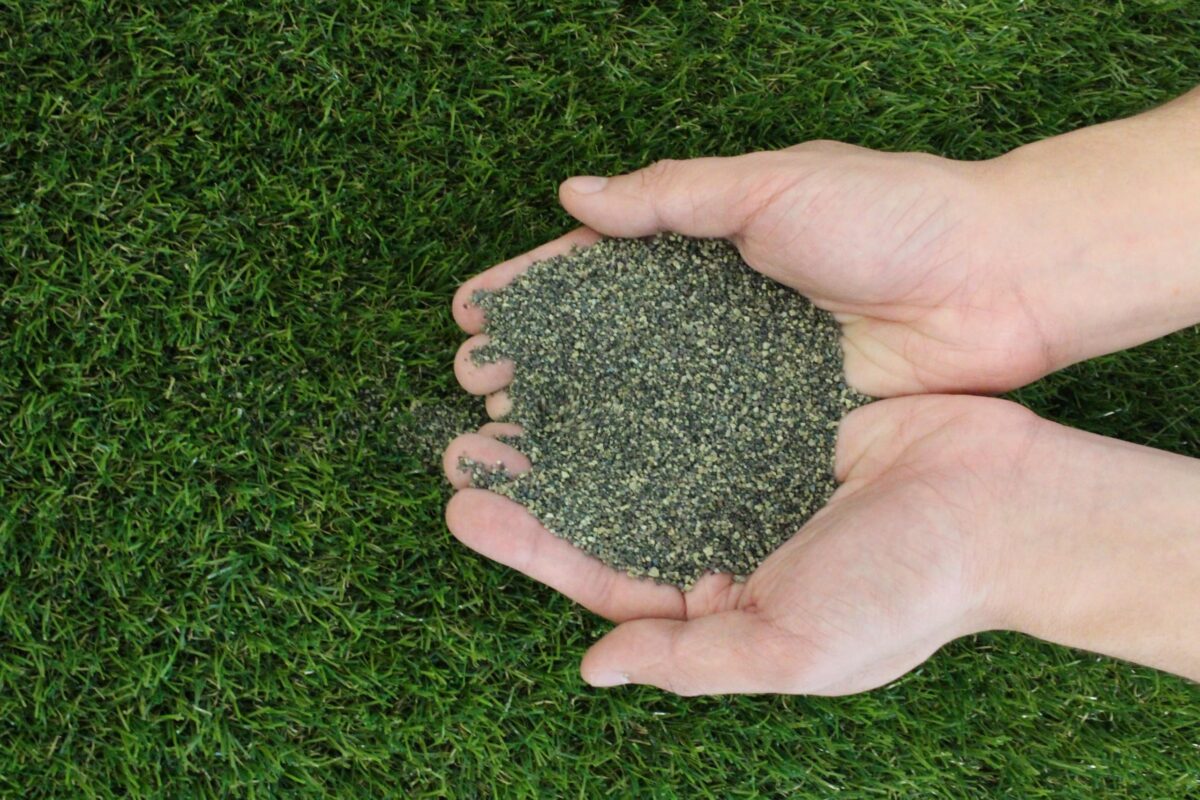
The infill is the sand that is applied between the blades during installation to weigh down the turf, keep the blades upright, absorb shock, and improve drainage. In dog zones, the type of infill used is as important as the turf.
Sand and Crumb Rubber – The Classic Options
Most common fill used is silica sand – economical, offers adequate drainage, suitable for almost any use. For sports fields, crumb rubber (recycled tires) fills the bill due to excellent shock absorption properties. Although previous generations of crumb rubber raised health concerns due to chemicals used, newer versions are more environmentally friendly.
Organic and Pet-Safe Alternatives
- Cork or coconut fiber – biodegradable, good temperature regulation
- Zeolite – natural odor absorption, popular for dog runs
- Microban-infused infill – antimicrobial, non-toxic, designed for pet turf
For pet owners: you need infill that drains urine fast, resists odor, and is non-toxic. More on that here: artificial grass for dogs.
Do All Turf Products Need Infill?
No. Indoor turf and some putting greens use adhesive instead and have denser, shorter pile that holds shape without infill weight. For most outdoor applications though, skipping infill means flat turf and poor drainage.
Which Synthetic Turf Material Is Right for Your Project?
Knowing what is synthetic turf made of only helps if it leads to a better buying decision. Here’s a quick guide:
| Application | Best Fiber | Key Specs |
|---|---|---|
| Backyard lawn | Polyethylene (PE) | 1.5-2″ pile height, medium-high face weight, UV stabilized |
| Pet areas / dog runs | Polyethylene (PE) | Short pile, permeable backing, antimicrobial, pet-safe infill |
| Putting greens | Nylon or PE | Under 0.5″ pile, minimal or no infill |
| Sports fields | Nylon | High durability, rubber/organic infill for shock absorption |
| Low-traffic / indoor | Polypropylene (PP) | Budget-friendly, shorter lifespan |
Curious what products exist across these categories? Types of artificial grass covers it well. And if you’re working with a concrete base: How to Install Artificial Grass on Concrete.
Need help choosing the right spec for your project? Site Prep’s artificial grass installation team can walk you through it.
High-quality artificial grass blades (PE, PP, nylon) are nonreactive. UV stabilizers and coloring are added during manufacturing – quality products adhere to safety guidelines and do not contain any heavy metals. The only known issue that may arise is regarding the crumb rubber infill that uses shredded tires. However, if this is important to you, then consider using organic or acrylic-coated sand infill.
Yes, but only if the turf is made using materials that have been tested and found to be non-toxic. There are various standards that should be met for safety purposes. One of the main problems that synthetic turf has is its ability to heat up faster than natural grass.
High-quality residential turf: 10-20 years. Artificial turf for sports fields under regular heavy usage: 8-12 years. The quality of UV protection during manufacturing is the most important aspect for outdoor durability.
Yes. Artificial turf is prone to becoming much hotter than grass surfaces on sunny days. Possible solutions include shade structures, reflective infill, or spraying the turf before using it.
Not always easy. Standard artificial turf can rarely be recycled due to various materials combined and glued. However, some companies have recently started offering environmentally friendly alternatives – check with the producer before purchasing artificial turf.