How Long Does Artificial Grass Last

You have likely calculated that the cost of installing synthetic grass exceeds that of sowing seeds for the creation of a green space – therefore, it is only natural to ask yourself whether the investment is worthwhile. How long will it take for the artificial surface to start looking worn out and require replacement?
Quality fake grass lasts 15 to 25 years with proper installation and basic maintenance. The artificial turf lifespan depends on material quality, how it was installed, your climate, and how much traffic it handles. High-use areas like dog runs and sports zones wear faster – but even there, 8-12 years is realistic with the right product.
Table of Contents
How Long Does Fake Grass Last? The Short Answer
With regards to a residential lawn where the usage is moderate for children, possibly one pet, and occasional entertaining, the lifespan will be approximately 15-20 years. Increase the time frame to 20-25 years with proper maintenance and some shade. Reduce the life expectancy to 8-12 years with two big dogs using it as a running track.
The synthetic turf life expectancy range is wide because there are a lot of variables at play. The quality of material used, the way it was installed, climatic conditions, pedestrian wear, maintenance – all these elements combined can determine the outcome. You get everything just right, and your artificial lawn will last much longer than the guarantee states. Do it incorrectly, and you replace it after only ten years.
To compare synthetic grass versus natural grass with regard to their cost and longevity, see: Synthetic Turf vs. Natural Grass: A Pros and Cons List.
Fake Grass Lifespan by Use Case
However, all artificial turf installations do not age equally. The front lawn installation that receives a good deal of viewing is quite a different scenario compared to the backyard installation for dogs that is used daily. The following explains what should be expected:
| Application | Expected Lifespan | Main Wear Factor |
|---|---|---|
| Residential lawn (light use) | 20-25 years | UV exposure over time |
| Residential lawn (active family) | 15-20 years | Foot traffic, pet use |
| Pet areas / dog runs | 8-12 years | Urine, digging, heavy traffic |
| Commercial landscaping | 10-15 years | Constant foot traffic |
| Sports fields | 8-10 years | Intensive daily use, cleats |
| Rooftop / balcony | 10-15 years | UV, heat buildup, weather |
These numbers on the lifespan depend on quality of material used and proper installation procedures. Cheaper turf poorly installed may reduce these numbers by half. This is not just theory – we see it all the time when homeowners choose the cheapest option based on bid alone.
5 Factors That Decide How Long Your Fake Grass Lasts
Understanding what affects the synthetic grass lifespan puts you in control before the first roll of turf hits your yard. Most installations that fail early share at least one of these five problems – and most of them are entirely avoidable.
Material Quality and UV Protection
This is where it begins – and where many get their fingers burnt. All artificial grass is not made the same. It is the composition of the fiber, backing, and the UV protection included in the production process that accounts for a large part of your artificial turf life expectancy.
What to look for in a quality product:
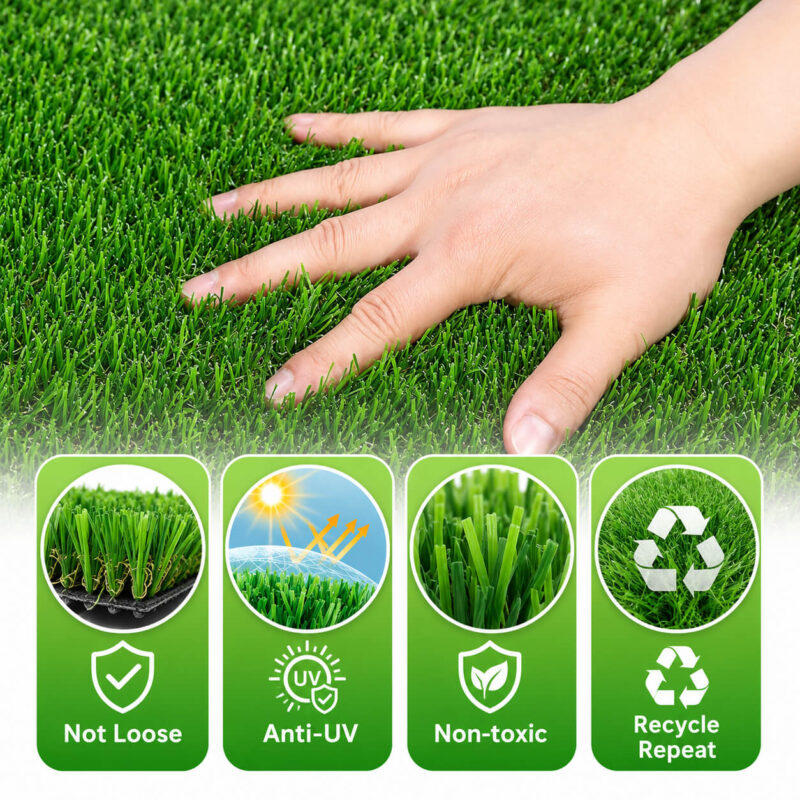
- Polyethylene fibers – soft, realistic, durable for residential use
- UV stabilizers built into the fiber – not just a surface coating that wears off
- Polyurethane or latex backing – locks fibers in place, resists separation over time
- High face weight – denser turf holds up better under traffic
Turf without proper UV protection fades, becomes brittle, and breaks down significantly faster – especially in the South or Southwest where sun exposure is intense year-round. Not sure which product type fits your situation? Types of Artificial Grass covers the main categories clearly.
Installation – Where Most Failures Start
It is possible to purchase high-quality turf but have a terrible-looking lawn within five years because of improper installation. Incorrect soil preparation is the main reason why lawns fail prematurely. Period.
Proper installation includes:
- Ditching and leveling of base for drainage
- Crushed stone or decomposed granite base compacted
- Weed barrier properly laid below turfgrass
- Seams joined tightly to prevent separation
- Edges fixed so that they don’t pull up or curl over time
- Even infill at the proper thickness
Loosened edges, standing water, and split seams – they’re not caused by faulty materials; they’re caused by poor installation. Get it right on your first attempt, and you won’t have any trouble with them by your third year. Here’s precisely what proper installation looks like: How to Install Artificial Grass.
Climate and Sun Exposure
Living place means a lot for many reasons. The lifespan of artificial turf in Seattle and the lifespan of artificial turf in Phoenix cannot be the same figure.
Main reason of degradation in warm and sunny regions is UV light, which causes discoloration and makes the surface brittle due to heat. Drainage in rainy areas is essential because when the ground becomes wet, it causes unpleasant smell and problems with the backing.
- Southwest (AZ, NV, NM) – 8-15 years; UV-resistant turf is non-negotiable
- Southeast (FL, GA) – 10-15 years; humidity and drainage are key
- Northeast / Midwest – 15-20 years; freeze-thaw cycles need quality backing
- West Coast (CA, OR, WA) – 15-20 years; mild climates are ideal for synthetic grass lifespan
How Much Traffic It Gets
The ornamental front lawn and the backyard filled with three kids and a golden retriever do not share the same experience. The more people tread on the lawn, the greater the compression and the faster the infill displacement. High-use turf needs different specs – higher face weight, more durable fiber types than those used in standard lawns.
In cases where you know your turf will take a beating, it is better to make the right selection from the outset to avoid the costly process of replacing it after eight years rather than eighteen.
Maintenance Habits
Fake grass requires minimal upkeep. Minimal does not mean zero. The difference between a perfect lawn after fifteen years versus an unappealing one in only eight years can usually be attributed to some simple practices performed regularly.
The longevity of your synthetic turf depends on:
- Frequent rinsing to remove dirt and neutralize pet waste
- Regular brushing in the opposite direction of foot traffic to keep blades upright
- Leaf removal before they decompose on the surface
- Catching and repairing small tears or seam issues early
- Checking infill levels annually and topping up if needed
How to Make Fake Grass Last Longer
The practical approach – what really prolongs your lawn’s life past its normal lifespan expectation:
Clean it often. Weekly minimum in dry regions, after each use by pets. Clean water helps to wash away urine salts, dust, and pollen through the drainage layer, preventing odor or backing buildup.
Brush it well. The use of a stiff bristle broom or brush, going against the natural direction of the blade’s growth, will ensure that the blade stands upright. Tangled blade fiber makes the turf appear old prematurely – regular brushing ensures additional years of its life.
Deal with minor issues promptly. A seam that needs fixing but is put off for months becomes a seam that tears easily and requires much higher repair costs. It’s easier and cheaper to deal with smaller problems quickly.
Shade the surface from sunlight if possible. Shading high-use areas in extremely hot regions prevents premature fiber degradation and lowers the surface temperature significantly.
Don’t ignore the recommended cleaning process. Even if everything appears to be okay at first glance, organic debris accumulating on the surface may have a negative impact on appearance and smell over time. Here’s a complete guide: How to Clean Artificial Grass.
Signs Your Fake Grass Needs to Be Replaced
However, no turf lasts forever. Here are ways of knowing when maintenance isn’t enough and replacement is the right call:
- Fibers remain flattened even after brushing – fiber breakdown, not a maintenance issue anymore
- Widespread fading or discoloration – UV damage that’s reached the point of no return
- Lifting edges or open seams – backing failure or base movement; creates safety hazards
- Persistent odor despite thorough cleaning – backing saturation, especially in pet areas
- Lumpy or uneven surface – base settling or infill displacement that can’t be corrected
One or two problems in a remote area could be repaired, but multiple problems throughout the entire surface call for replacement. The good news: how often does turf need to be replaced in a standard residential setting is not very often – just once every 15 to 20 years for most homeowners.
Is Fake Grass Worth It Long-Term?
Do the math. A high-quality fake grass installation costs more upfront than grass seeding or sodding – but eliminates water bills, lawn care equipment, fertilizer, pesticides, and the ongoing time cost of maintaining a real lawn. Most homeowners see their return on investment within 3-5 years.
After that? Every year of the remaining 15-20 year artificial turf lifespan is pure savings. No mowing, no watering, no reseeding, no seasonal fertilizing – just a lawn that stays green and requires maybe an hour of maintenance per month to look its best.
At Site Prep LLC, we help homeowners choose the right product for their specific use case and climate – so the installation performs at the top end of its expected lifespan, not the bottom. The difference between a lawn that lasts 12 years and one that lasts 22 often comes down to decisions made before installation starts.
Whether you need a lush residential lawn, a durable pet area, or a low-maintenance commercial space, Site Prep LLC’s artificial grass installation team handles every stage – from base prep and product selection to final infill and finishing. And if you have dogs, our artificial grass for dogs installation service uses pet-specific turf built for exactly that kind of daily punishment – proper drainage, antimicrobial backing, and fibers that hold up to digging and running without breaking down in two years. Get in touch for a free consultation and find out which product is right for your yard, your climate, and your budget.
FAQ
The average artificial turf lifespan for residential installations ranges between 15 to 20 years with proper maintenance and regular usage. Premium quality artificial grass that is correctly installed in a moderate climate zone will even have an estimated life span of up to 25 years. Eight to ten years is the lower end – typically sports fields and heavy-use pet areas.
Yes, in practical terms – but it’s not a direct comparison. Natural grass does not require “replacement” at all times, but constant expenditure on water, maintenance, and repairs will be necessary for it to continue functioning. Artificial grass has a finite lifespan, but the cost of upkeep is minimal by comparison. Within a 20-year span, the total cost of maintaining artificial turf will likely be less than that of natural grass.
For dogs, you can count on an 8-12 year lifespan with turf made especially for pets. Typical turf installed as a dog run won’t last as long – a combination of urine, digging, and running wears down fibers and backing faster than standard foot traffic. Getting the correct product spec and maintaining proper cleaning techniques are what keep pet turf functional at the upper end of that range.
In extreme heat and sun – Arizona, Nevada, Southern California – expect 10-15 years from UV-stabilized turf. Without proper UV protection built into the fiber, that drops to 8 years or less. Shade structures, lighter-colored infill, and occasional hosing down to reduce surface temperature all help extend the synthetic grass lifespan in high-heat regions.
The clearest signs: blades that won’t stand up even after brushing, widespread fading that doesn’t respond to cleaning, lifting seams or edges that create trip hazards, and persistent odors – especially in pet areas – that cleaning can’t resolve. Isolated issues are usually repairable. When problems appear across the whole surface, replacement makes more sense than ongoing repairs.
All synthetic turf fades to some degree – that’s unavoidable with any plastic-based material exposed to UV. Quality turf with UV stabilizers built into the fiber fades very gradually over 15-20 years. Cheaper products without proper UV protection can show noticeable color change within 5-7 years. Choosing a UV-stabilized product is the single biggest factor in maintaining appearance over the full lifespan of artificial turf.